
FICTION
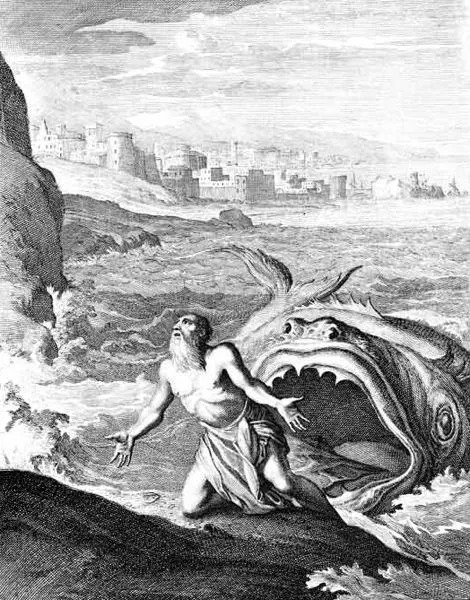
Out of Nineveh
Jonah Buitschaffer recalled what he’d been doing when old man Johnson clattered into the bunker. He’d been framing an extension to one side of Johnson’s survival chamber, reaching into the dark earth with his nail gun to join two pieces of timber.
Old Johnson had big sweat patches under the arms of the baggy T-shirt that engulfed his skinny frame. Holding a length of two-by-four up against the rocks and mud, Jonah watched as Johnson barrelled towards him. Leaves and filth skittered off his boots, thin chest heaving.
“It’s happening. I’m locking myself in. You can stay or go.” Johnson’s breathing slowed down as he spoke.
Jonah stifled a laugh. Play along. He said he’d stay, thinking the old boy would stop his craziness before the day was done and he’d earn himself another few fifties, cash. Johnson climbed back up and made the place airtight, turning the upper porthole lock he’d stolen from a decommissioned Russian submarine until it squeaked shut against its metal casing.
***
Jonah wanted to get home at the end of his workday, but it turned out Johnson had a shotgun hidden in his bunker. Fully loaded.
“I ain’t lettin’ you out, boy. Not for nothin’.” The old man’s gun barrel shook as he aimed it at Jonah’s chest.
The next morning it became clear what had rattled the old man. A series of mass poisonings in major cities around the world. People collapsing in the street, dying in violent spasms, their bodies twisted into absurd shapes where they fell—on the street, in bars, in their beds, as they worked, slept, or ate.
Most governments exercised well-rehearsed emergency management plans, but they had no blueprint for dealing with the super-massive extinction spreading through villages and towns. Whole populations were reduced to bands of scavengers. The rank perfume of decay was in the air. Within days, curfews were established and security cordons set up, according to the radio. Reports over the internet said cholera and typhoid proliferated among those who were left. Children lay weak from dysentery beneath the golden domes of the Place Vendôme in Paris; cities such as Sydney, Toronto, and Leeds succumbed to lawlessness. To Jonah, it sounded as if human civilization had putrefied and now lay dismembered on this rock that kept circling the sun to no obvious purpose.
Jonah and the old man ate cans of beans and franks heated up in the microwave, the thrum of the generator in the background. They listened to the radio telling the horrors unfolding above them as they drank distilled water from crates. They pissed in a chemical toilet and slept in Army surplus sleeping bags. They barely ever washed. They read the internet, their expressions blank, and played interminable games of chess without exchanging a word. After a while, the internet reports reduced in frequency until finally they heard nothing more.
***
Years later, the old man was long dead, and Jonah still underground. Jonah remembered the day old Johnson died, only months after they’d enclosed themselves. Jonah came out of the chemical toilet at the far end of the bunker and saw the old man leaning forward against the kitchen table. Jonah was too far away—maybe fifty feet—to see what was going on.
As he got closer, he called out, but there was no reply. Knowing Johnson to be somewhat deaf, Jonah raised his voice. Johnson’s legs remained motionless, feet covered by the same boots he’d worn for months since he’d closed them in, the same scabby pair of jeans cladding his legs as they leaned over the table. When he got to the worn oak table, Jonah found the old man slumped against it, hands cupped in an attitude of prayer, blue eyes wide open. He was clutching something between his mottled blue hands.
Jonah pried those hands open and found a picture of the old man with his mother, taken when he was a little boy. It must have been eighty years old.
***
Some time later, how long Jonah couldn’t say, he reached the end of his supplies. Little fresh water left, almost no food. Time to get out, find God knows what upstairs. Upstairs: a reverse heaven, a place that held nothing he could remember clearly anymore.
He pulled together his workbag and tools, switched off the computer and generator, then put his foot on the first rung of the ladder that led up to that old Russian submarine hatch. He was leaving home to go home.
***
Outside, the air was cold and bright, an April day like any other he’d known in his first thirty-eight years of life. He was forty-nine now. Old. Or older, at least: dark hair that ran past his shoulders with full-flowering grey streaks spreading out from his temples, lines around his mouth and eyes, dark rings not just from being underground, but from age. His body had slowed, fat accreting round his middle.
He looked for his truck, which he’d parked—unlocked—about fifty yards from the “secret” entrance to Johnson’s bunker. At first, as he’d expected, he found nothing. But as he searched, the outline of his old Ford flatbed became discernible through a thick mess of brambles. There was no way he was getting through that. So he slung his tool bag over his shoulder and started walking the three miles of dirt road back down to Lytton, its buildings emerging as murky shapes from the mist in the valley below.
***
When he reached Lytton, he found emptiness. Everyone dead or gone. The old sign that adorned the town’s only pub—it had barely hung on even when the place was open—lay broken beneath the entrance. The windows smashed in, frames half-rotted. Looking around the main street, Jonah found the same story. Not death, but the destruction of property that follows death, with no one around to claim their rights.
The pharmacy at the end of Main Street had taken a battering. Jonah walked through the mildewed, dust-streaked entrance and found thieves had stolen all the drugs; there wasn’t a scrap of inventory left in the place except for baby clothes. Jonah guessed there wasn’t much need for those anymore.
After a few hours rambling, Jonah stopped for a drink from his canteen and the last few long-life biscuits from the bunker. Then he found his way back to what remained of his house. The eaves troughs he’d hung from his roof lay half collapsed against the ground, the corner of one still clinging to the roofbeam. His windows had been staved in; from outside, he could see what was left of his belongings jumbled up in piles in the center of his living room.
Unpainted for years, his old home now resembled some sepia photo of a decayed building, dark patches blotching the ancient paintwork. Rotting cladding hung, half on, half off, to the interior wooden studs and joists that made the guts of his home. Mice and rats nested between the joists. Jonah went inside.
The looters hadn’t taken anything precious. The pictures of him with his girlfriend in the pub of the local Royal Canadian Legion were still there. He thought of her briefly, certain she was dead. He remembered walking with her up at the riverhead, holding hands that summer when they’d first met fifteen years ago. The plans they’d made together—all gone. His vinyl records remained, though his stereo had been stolen. In the kitchen, no tins or bags of food. The cups and dishes were smashed, but the refrigerator and stove stood silent watch, inert without electricity to bring them to life.
Jonah turned the tap at his kitchen sink, but nothing came. As he looked through the window, he thought he saw something in the neighbor’s yard, then dismissed it. Then he looked again. Someone was watching him from inside his neighbor’s ruined house.
***
A dark shape, moved in the shadows inside his neighbor’s property. The person was scrunched up against the wall of what used to be Tommy’s kitchen. Buitschaffer ran out through a ripped-out hole at the back of his kitchen onto the remains of his back porch. He shouted over the collapsed cedar fence at the figure:
“Hey!”
The shape disappeared. Buitschaffer called again. This time the shape came out from the darkness. A man, about Buitschaffer’s height—but younger. Dressed in a dirty black hooded top with some old rock band’s name on it, a mad yellow logo Buitschaffer dimly remembered seeing more than twenty years ago.
“What up, G?” The youth took out a cigarette and lit it from a cheap plastic lighter. “Want one of these?”
Buitschaffer shook his head.
“You new around here?” The young man pulled back his hooded top to reveal a thin, stubbly face, pale from lack of sunlight. Eyes so deeply sunk in their sockets their color was hardly discernable.
Buitschaffer looked around him. “I live here. Or used to, anyway.”
“Ain’t nobody live here, brother. We all live underground.” The youngster emphasized the word all, and Buitschaffer understood he meant tens, hundreds, maybe more, survivors. “Come on. Better get before anyone sees you. They shoot on sight.”
“They?”
The young man turned and started walking at speed toward the back of Jonah’s neighbor’s garden, vaulting what remained of the three-foot cedar fence, long since swallowed by weeds. He stood in the access road behind Buitschaffer’s property.
“Come on, man!”
Buitschaffer followed without thinking. The young man led him to another burnt-out property on the other side of the access road behind Buitschaffer’s house, and then inside and down a flight of stairs into a cellar. The air stank of human feces and rotting wood. Jonah caught up with him as the young man banged on a grimy, rusted metal door.
“Open up! Incoming!”
Buitschaffer heard the squeak of rusty locks turning, and the door rolled slowly to the left.
***
Inside was a digital sepulchre. Rows and rows of screens emitted an ethereal light. Tech devices of every kind: TV screens, cell phones, digital readers. Buitschaffer walked a few paces behind his new friend with the hoodie, noting his confident stride among the chairs, desks, and mattresses that filled this cavernous space, each slouch-station filled with a person of indeterminate sex and age. All transfixed by their screens.
“Hey everybody!” Hoodie shouted. “This is—oh wait, I don’t know your name.”
“Jonah.”
“Jonah,” Hoodie repeated. “De profundis clamavi, Domine. Am I right?”
Buitschaffer stared at him. He had no idea what the guy was talking about.
Hoodie giggled like a little girl. “Don’t worry about it. We got what you need. And maybe you got what we need? We need someone who can drive a nail like a man. And cut wood like a pro.”
Buitschaffer tried to read that thin, nervous face. “What do you mean?”
“Which bit? When I said we have everything you need? Oh, we get supplied by the government. A big drop once a month. Everything: cigarettes, medicines, food, electricity, water, propaganda—the works, my man, the works!”
Buitschaffer picked up the mad glint in the sunken eyes and decided to get out as fast as he could. But he was curious. Who were these people? What were they doing here? Hoodie strutted on behind the last row of La-Z-Boy chairs. An obese man with thick glasses, a dark T-shirt, and five-day stubble slumped in the chair nearest Hoodie, his fingers flying over a controller as he played a video game. The fat man reached a pause in the game and popped half a cake bar in his mouth. Reaching downwards, Hoodie pulled up a flat pack of half-liter bottles of mineral water.
“These doing it for you, O patience-in-distress? Or how about these?”
He banged on a hatch on the back wall, and it fell open. Inside the hatch was a freezer compartment full of frozen steaks, burgers, and chicken. “Feast ye, Jonah! Break your fast, homeboy!”
Hoodie handed Jonah a bottle of water from the crate and grabbed a pack of frozen chicken breasts and a box of frozen pork ribs.
***
Three hours later, Buitschaffer finished eating. He felt drunk on the cheap food, quickly and poorly roasted in an old electric oven powered by a diesel generator. Jonah struggled to stay awake, his belly full of grilled meat. Buitschaffer hadn’t eaten meat since before going in the bunker, and it was intoxicating. Hoodie licked his rib-greased fingers and belched indelicately.
“Here’s the problem we have.”
He pulled out a pack of cigarettes and eased one into his mouth, lighting it with a rainbow-colored lighter. Then he offered Jonah a smoke. High from the meat, Buitschaffer accepted the cigarette in the hope the nicotine would keep him awake.
“We’re good and cozy,” Hoodie said. “As survivors, the government gives us the basics. And through the internet, we have access to all human knowledge—moderated by the government, of course. We could leave our compound any time. Just like you left your little burrow up there in the hills.”
“But what about the—?”
“The people who I said would shoot on sight? The armed gangs marauding around the planet, looking to kill survivors? They don’t exist. End of. They are non-individuals in non-homicidal groups, my man!”
Hoodie paused, watching as Jonah drew tentatively on his cigarette, coughing as he exhaled the smoke. Jonah quit smoking in his mid-twenties. Why he was smoking now, God only knew.
“Did it ever occur to you that the whole thing was a set-up by governments, my man? There were too many of us, and we were getting restive. We stopped voting the way they wanted us to, so they had to take care of us—and blame it on someone else. Kill us all, and let God take care of us. Trouble is, they did too good a job. Now there’s not many of us left—so they’ve decided to look after us. Otherwise, who’ll be the pigs on their data farm? They need someone to control, right? As they appear to have belatedly realized.”
Hoodie smirked and drew on his cigarette. Jonah put his empty plate down beside him and tapped ash into the meat grease on his plate. The rest of the figures in the cavernous room kept watching their screens, faces fixed on playing games, watching TV, surfing the internet.
Jonah sat upright. “So why do you want me if you have everything you need?”
“Simple.” Hoodie’s eyes gleamed in his sallow face. “We want to know how to make things. You know, buildings. Fix things. Get this place going again.”
***
Early next morning, Buitschaffer stood in front of a bunch of bored onlookers with an open tool bag. They stood on a grassed, flat area outside their bunker. First, he taught them how to prepare a piece of ground, making sure it was flat with a spirit level. Then how to cut wood to length. How to use a plumb line for corner cuts. He explained future lessons would cover framing, flooring, and siding. Hanging doors.
After the lesson, Jonah put Hoodie, the fat video games man, and a few others to work as laborers. Within a week they had their first building up—a long shack. No one was sure what to use it for, but it was there. The gang were mostly young and unkempt: Buitschaffer noticed three of the women, one barely a teenager, were pregnant, and he feared for the world those children would be born into. But for now, he had to teach them how to fend for themselves.
He taught them how to dig trenches and repair siding and plug drywall. He showed them how electrical connections work, how to repair plumbing.
As the days went by, Buitschaffer could tell their fascination with him was fading. Where once they treated him with deference, now Jonah sensed growing resentment—resentment that he was more capable than they would ever be; able to tell good wood from bad, drive a nail straight, mend his own house.
***
Buitschaffer moved out of their compound. He slept in his newly fixed house. There was still no water or electricity, but he’d mended the roof and switched out the rotten siding, covering the new stuff with paint stolen from the gang’s lair. He’d found some emergency candles he could use, dug a latrine in the yard. He preferred being alone to sitting underground, watching them stuff themselves with processed food, mooning over re-runs of old TV shows on the internet, and playing endless video games.
Buitschaffer had his library of books and his vinyl records, even if he couldn’t play them. In the mornings, he liked to get up and run through the town’s deserted streets, then come back and take a shower with rainwater from the makeshift boiler he’d rigged up in front of his house. After breakfast he’d check on the seeds he’d planted and read while he waited for his pupils.
Mostly he read the tatty copy of the Bible he’d been given as a schoolboy thirty-five years ago, the stories of Daniel and the guidance of Leviticus. He lost weight and cut his greying hair into a severe crew cut. He now resembled a monk as much as a laborer, a figure from the Old Testament laden with power tools. Jonah had plans. Plans to use these people to rebuild the town. Get the generators working again and secure the water supply from the reservoir. Grow crops. Repair the roads.
The few members of the crew who agreed to work for him showed some improvement. Their flabby limbs took shape, and they began to get interested in gardening, even if they struggled with the basics. Most of them, though, were interested in nothing at all, content to sit with their video games, packaged cookies, sports drinks and muffins doled out by the government. In another age, you might have called them useless; in this new world, they were normal.
***
The day they came for him, Jonah woke up with a sore head from the red wine he’d discovered in a neighbor’s basement. He had zero interest in trying to show the gang how to do anything except recover from a hangover. He turned up anyway because he’d promised he’d show them how to fell trees—use saws, mauling axes, wedges. How to judge the way a tree would drop from the twist in the trunk, and allow for that in the angle of the cut.
He’d found an old billycan with two liters of gas in it in Tommy’s shed; enough to give them a lesson on the chainsaw. And yesterday he’d oiled his old saw and sharpened the chain especially for his pupils, like they’d know the difference between sharp and blunt.
As he pulled on his saw’s starter, he noticed the blank look in his pupils’ eyes, that same passive anger he’d seen when he met them. They probably couldn’t wait until break time, Buitschaffer thought, when they could go back down below the earth and sit in front of their screens, fading into digital oblivion with cheap entertainment and shrink-wrapped snacks.
They sprawled on the ground, watching as he cut into one side of an alder at forty-five degrees, removing a thick triangle of trunk. Then he steadied himself behind the tree, spread his legs, and started the back cut. One minute later the hundred-foot alder lay on the ground, ready to be limbed and bucked.
By now the sun had risen to the point where Buitschaffer could feel its heat on his neck and forearms, a thin rivulet of sweat slipping down his spine. He had acquired a serious thirst and needed some water. He asked for a drink and one of the girls looked at Hoodie, who handed her a bottle of water from his bag. She walked over to Jonah with the bottle marked GIFT OF THE CANADIAN GOVERNMENT on it in white letters.
As he twisted the cap off, Buitschaffer noticed some of the gang had spread out their jackets on the ground. They were playing a gambling game on their mobile phones. Liar dice. He raised the bottle to his lips, seeing their excited faces, their minds closed to everything except what was happening on the screen.
Buitschaffer drank deep. As he closed his mouth and drew the bottle away from him, he felt the burning first in his throat, then tearing through his trachea. He fell to the ground and saw the fat man in the black T-shirt heave towards his body, wielding a knife. As if some spirit had taken him, it seemed that he stood outside his body, watching the fat man pierce his side with the knife. Then he saw his life’s blood leave him as the gang kicked and stomped his corpse. And then they turned from his corpse to trudge back to their computer screens, their video games, internet, and junk food. His arms lay sprawled at his sides and his spirit flew away from the scene: it was finished.
J.W. Wood’s work has appeared in magazines and anthologies around the English-speaking world, most recently in Sinister (Quill and Ink Press), Black Cat Mystery Magazine and the leading UK cultural magazine Porridge. The author of six books of poems and a novel all published by small presses in the UK, 2024 will see collections of his short fiction appear in the US and UK. He is the recipient of awards in the US, Canada, and India.
Next (Christopher Hadin) >
< Previous (Ryan Gutierrez)
Artwork: From Historiae celebriores Veteris Testamenti Iconibus representatae by Caspar Luiken, 1712. Public Domain.
 Heart of Flesh Literary Journal