FICTION

Funny Bone
At 7 a.m. on an otherwise unremarkable Tuesday in June, Anderson peeled himself from the crisp, white world of his hotel bed and began dressing for Sylvie’s funeral. The temperature was well into the 70s, already, yet he pulled the moss-colored sweater she’d always liked over his bedhead. The fluorescent light above the mirror mocked him. He was too tall and good-looking in a pleasant, off-kilter way that served his career in comedy. On one of their first dates, Sylvie had told him he had the face of an old sea captain. He could see, now, her dark eyes peeking coyly over the glass she’d held to her lips.
And that’s a compliment, she’d said. I only date men who look like sea captains or Al Pacino.
His hand trembled as he picked up his toothbrush. She was gone. And she’d been gone from his life for nearly two years. Yet, the finality seemed impossible. The world was no longer as he had known it in his twenties, or even the week before, when her breath had been a part of the atmosphere, her steps a participant in the gravitational pull.
As he combed his hair he thought of her hands: her long fingers, bony knuckles, nails bitten down and never painted. Perpetually cold. If he had been asked to give the eulogy, which he had not, he thought he would start there — cold hands. Cold. His mind recalled this as her defining quality, like he was writing a bit. Would I lie? he asked himself. If I had to stand before everyone who knew and loved her? Would I blow smoke? Talk about her kindness? Her grace? Or would I tell the truth?
Because the truth was, despite all the love that still resided achingly in his chest for her, Sylvie had not been a particularly kind or gracious person. In fact, she was cynical — sometimes downright mean — and she had taken all his love and smashed it, hard, like porcelain against pavement.
He hadn’t cried yet. Despite the terrible internet announcement and the confirmatory phone calls to mutual friends, Anderson still couldn’t quite believe that someone so arrogant could succumb to such a fate as premature death. He kept thinking maybe this was all some elaborate bit, some stunt she’d invented to shock people.
He’d accused Sylvie of this before, in breathless fights he never won. Everything, it seemed, was an attempt to make fun, evoke discomfort that she could unpack later — on stage or at a dinner party — in a grating, mocking voice to make strangers laugh. He wondered, first to himself and then out loud, if she truly cared for anything at all.
You signed up for this, she’d said over an untouched cup of coffee in the winter of their relationship. And she was right. Hadn’t he fallen for the sneering woman in the half-full comedy club the summer after college? She presented herself exactly as she was. No more. No less. Low-rise jeans. A superhero t-shirt made for a small child. Throwing the nerds a bone, she’d said stone-faced, a quick jump of her eyebrows the only indication that she was joking. Her dark hair was cut close to the scalp, a page-boy style the envy of every hipster who didn’t have the French bone structure to pull it off. Her coal-black eyes were, and would forever be, the death of him.
Sylvie peppered — had peppered — her body with tiny, terrible tattoos that served as a constant source of the kind of interesting, ironic conversation she lived for. They were mostly drunken decisions: Homages to fast food chains and movie franchises. Inside jokes. On their fourth date, she and Anderson got matching tattoos of Chili peppers, all while cracking jokes about stupid couples with ink that lasted far longer than their relationships. Somehow, in their slap-happy, sardonic state they thought themselves the exception. It was all a joke, after all, a test to see who would break first.
Now, in his painfully silent hotel room, Anderson ran a finger over the faded pepper at the base of his forearm. It would be more embarrassing to get it removed, he’d reasoned over the last year, though he’d grown to hate the centimeter of skin, the engraved reminder that he’d once belonged to someone and now no longer did. He was afraid, in his half-dazed state, that she would linger forever. And she had — he’d seen through a clip on the internet — used “matching tattoos with my ex-boyfriend” in her act, in which she referred to him as the personification of a hangover. He rewatched the video in excruciating depth, scrubbing it like a detective looking for clues, searching for any sliver of sadness on her cruel face, any indication that she might miss him. He told people for a while, when the wound was still fresh, that she was a sociopath. Now, he didn’t think that was correct. Sylvie simply hadn’t cared for him as much as he cared for her.
He’d dated since, on and off with a blonde named Camille who he took to plays and church on the weekends. She was sweet, bubbly, and altogether much prettier than Sylvie, yet there was some indiscernible quality that kept him from pulling the trigger. Camille had texted him five times since his flight landed, short check-ins filled with nauseating emojis. She’d asked if she could call the night before, a request he’d denied under the pretense of busyness as he sat eating takeout on the hotel floor. The resounding truth was that no one was Sylvie; and now, Sylvie was gone.
The funeral was in an old Victorian. It seemed inappropriate to confront death in such a place, its powder blue eaves fit for a dollhouse. Anderson wiped his palms against his pants and stood, roasting on the sidewalk for several minutes. So this was July in New Jersey. Sylvie spoke of her tiny coastal town often, the only time he ever saw her get sentimental about the past. He’d never gotten to see it when they were together, even after he’d dragged her back home to Tennessee, where she’d stayed the week in his grandparents’ extra bedroom, a world of wood paneling and wheezing air conditioning.
***
It was there, in that 1970s time capsule, that he told her he loved her. She’d been sprawled over a rainbow quilt, fanning her face with old photographs they’d found hiding in the closet.
What a Casanova. She held up a yellowed picture of Anderson at twelve or thirteen, the peak of awkwardness, in blue braces and a neon polo.
No, don’t! He’d lunged for the evidence, her laugh — the real one, the kind that came out through her nose — filled the room.
I would’ve had a thing for you in middle school, she said when the dust settled.
Don’t lie. He collapsed onto the bed. The room smelled like sunscreen and his childhood. Looking at her, in this place he’d always known, made him swell with sincerity.
The words jumped off his tongue before he could stop them. I love you.
It hung in the air for a breathless moment, desperate molecules mingling with the humid air. Anderson felt himself start to deflate. She looked stricken for a moment, the ruins of a smile on her lips.
I know. The air flew rapidly out of his balloon heart. He’d thought maybe his lungs would be next. Then, with the realest, sweetest smile he’d ever seen she said, I love you too.
***
The sky outside the funeral was offensively blue. The grass was recently trimmed; fallen blades littered the sidewalk. The smell was too sweet, the sun too cheerful. When he died, Anderson decided, he wanted it to be a crisp November day full of gray, contemplative skies.
When his feet finally decided to work again, they carried him up the sidewalk without his consent. Walking into the funeral home, he thought of her apartment, a studio that sat above a bodega twelve blocks away from his own. She had a huge mattress but no bed frame, so it sat in the middle of the floor, a tangle of unmade polyester satin. A plant the size of a man took up the far corner of the room, along with a pile of records and dog-eared books. Weird little figurines peeked from hiding places in the kitchen nook —porcelain gnomes, celebrity action figures, plastic food. She took pride in these small things, collecting them wherever she went. Everything for the irony. The light was always dim; the air was always sour. It was lonely and unsettled, not really a home at all. Standing on the threshold of the old, terrible house, Anderson missed it more than anything.
A guy walks into his ex’s funeral, he thought. Freshly vacuumed carpet flattened under his dress shoes. Everything was pastel. The sick floral sweetness assaulted his nose. Embroidered armchairs occupied the aching corners. She would have hated it. Familiar faces floated around, acquaintances he was used to seeing in the reddish light of underground bars. There were other comedians and Sylvie’s friends from college — amateur rockstars and stoner artists and the old roommate Anderson once despised. Even here, there was laughter.
His chest felt like it was shrinking, squeezing in on itself until there was no room left for his organs. He gravitated towards the back corner, where he stood alone for several eternal minutes. If a landslide or a hurricane struck at that very moment, he would have gladly let it take him away.
The acquaintances gravitated towards his corner like fruit flies. Finoula, a soft-spoken girl who’d been Sylvie’s neighbor, put a hand on his arm.
“It’s good to see you,” she said. “How are you, Andy?”
Andy. I don’t even call you that, Sylvie sneered one night after Finoula stumbled in and out of the apartment, laughing louder than a third wheel ought to at midnight, looking through her eyelashes at Anderson every time Sylvie turned away.
She’s a stripper you know. Sylvie rolled her eyes and threw herself backward onto the mattress. I bet they give her the Tuesday morning shift down at the Gentleman’s Club on 8th.
I think the proper term is ‘exotic dancer,’ Anderson said, a smile poured over his face. He swam in her jealousy, the warmth of being wanted.
I wonder how much her boobs cost whoever paid for them, she said.
Priceless. Anderson grinned.
She hit him in the head with a pillow.
At the funeral, Finoula wore a dress fit for a pilgrim. Hiring a stripper for funerals? Goldmine, Anderson thought. No, he stifled that cruel voice in his head. Next to him, tear tracks on her pale cheeks, Finoula looked like a broken thing.
“Sylvie was a good friend to me,” she finally said. Anderson had a hard time believing her, but he nodded anyway. His arm wrapped itself around her shoulders. She began to weep, silent, terrible sobs that jerked her body forward. Sunlight blinked through the heavy curtains next to them.
Then came Sylvie’s cousin Demi, who looked at Anderson like he shouldn’t be there. She didn’t say anything but stood in their weird little huddle, like standing near them might make her disappear.
Declan, the bassist Sylvie dated after Anderson followed behind her. He was short and handsome and didn’t look at all like Al Pacino. They shook hands. Anderson bristled.
“I appreciate you all coming,” Demi finally spoke. “I know you all meant a lot to her.”
Anderson nodded but didn’t reply. He wasn’t sure what to say. Sorry for your loss felt too generic, and it was all their losses, really.
It was a heart condition that nobody knew she had, but they didn’t talk about that. Instead, the silence grew over them like mildew until Declan started talking.
“She was incredible,” he said.
Red. Anderson remembered seeing Declan across the room at a party the night he and Sylvie called it quits, arms looped around her waist like they’d been there before. Anderson hadn’t intended to go to the party that night; he’d made big plans to wallow for at least the weekend. But he had gone, and so had Sylvie, and she looked completely fine with someone else’s arms around her. Anderson would probably have lunged at Declan in the funeral home, tearing the stupid gold hoop from his ear, if she hadn’t done the same thing to him. Declan’s band Pyrite had a breakup song that was obviously about Sylvie, but the corner didn’t bring that up either.
Declan with the earring? Really? Was this a joke to you? Anderson texted her that night from a friend’s couch.
At four in the morning, she’d replied: Everything is a joke to me.
Did you cheat on me? He’d sent. She hadn’t replied.
“She was always getting me into trouble as a kid,” said Demi with a smile. “When I stayed at my aunt’s house, she used to sneak out of this tiny bedroom window and promise to bring me back a milkshake if I’d be her alibi. But now that I think about it, I don’t think she ever actually got me one.” Demi’s voice was too even, rehearsed. She’d told this anecdote before.
“Shocker,” said Declan. His smile was too wide, too genuine. In it, there was a familiar residue of hurt. “It’s hard not to love someone like that.”
“Yep,” Anderson heard his voice say. “Especially if they can’t be bothered with you.”
His tongue burnt with the poisonous words, the bitter cadence of his voice surprising even him. The group stood still. Demi looked like she might punch him in the nose.
Then, a man dressed in a dark suit addressed the group and the horrible moment passed. They took their seats. Anderson studied the stitches on his shoes. The man’s words rolled over him until the very end of the sermon when a familiar psalm pierced through the muffled air.
Even though I walk through the valley of the shadow of death,
I will fear no evil,
For you are with me.
Your rod and your staff
They comfort me.
You prepare a table before me
In the presence of my enemies;
You anoint my head with oil;
My cup overflows.
Surely goodness and mercy shall follow me
All the days of my life,
and I shall dwell in the house of the Lord forever.
The words were like stones. Nothing was funny. Anderson felt something swell inside of him like a wave. Looking at the ceramic, iridescent urn to the preacher’s left felt like staring evil in the face. He wasn’t fearful but he was angry and sad. He had the sudden urge to claw his way back in time, to apologize to Sylvie for what he’d just said to her friends, for everything he’d said since they’d gone their separate ways.
The last time he’d seen her was three months before, outside a gig in Chicago. Anderson had gotten his first big job in comedy, writing for a late-night sitcom. When the news was released, Sylvie texted and sent flowers to his apartment, a gesture he hadn’t replied to.
Outside the club, he’d been pretending to smoke so he could talk to a cute girl with box braids and heavy eyeliner. Sylvie walked out the door just as he was about to ask for her number. His stomach lurched. Drifting away from a group of people he didn’t recognize, she marched up to him with her arms crossed.
I’ve been trying to say congratulations, she said.
Yeah. Thanks.
You’re a hard guy to get ahold of now that you’re rich and famous.
Then, without warning, Sylvie took the cigarette he hadn’t inhaled from his hand and put it between her lips. He remembered thinking, then, that this was probably the closest he’d get to kissing her again.
You can’t just — he’d started to say, but then someone from the hive of leather jackets called her back to the group and she turned away.
I’m proud of you, she’d called back as they engulfed her. At the time, the words made him sick.
There was a reception after the service. Anderson didn’t know why he went, but he did, only to stare at a buffet of food he couldn’t bring himself to touch. He made his way through the family members he knew, offering up stiff hugs and ignoring their furrowed brows.
“Hey,” Demi appeared behind him, handing him a glass of wine. She’d spent a lot of time at Sylvie’s apartment when they were together. At one point, he’d even considered her a friend.
“Demi —”
She took a sip from her glass and looked at him without animosity. “She really did love you, you know.” She said.
Anderson sighed. The wine was too sweet, heavy in his mouth. “I guess I know. I’m really sorry, that just slipped out of my mouth earlier.”
Demi nodded. “You don’t have to explain. I know what she was like. But she talked about you a lot. I don’t think she ever got over how much tension there was at the end.”
“Guess it doesn’t matter,” he said.
“It matters.” Demi’s eyes were big and round. “She loved you, and I care about what you think about her when you walk out of here.”
Anderson took another sour sip from his cup. A waiter was setting up a microphone in the front of the reception hall. There was whiny, metallic feedback as he adjusted it on the stand. Before Anderson could reply, Demi was shuffled to the front to speak. She pulled the mic from its stand. It trembled in her hand.
“In true Sylvie fashion, we’re going to open the floor for stories.” Her voice wobbled as she started talking about their childhood, a Sylvie with scraped knees and kitchen-scissor haircuts that Anderson hadn’t known. She was only a few moments in when the tears took over. She began to choke on her words in between painful bouts of silence, the only noise in the room the clink of silverware. Finally, she couldn’t take it anymore. She scrambled from her spot in front of everyone, pushing the microphone into Anderson’s hands on the way to the bathroom.
All eyes turned to him. Dumbfounded he thought, This feels like one last practical joke.
Anderson could have turned the mic off and left it sitting on the bartop, but he could hear Demi crying from down the hall. He brought it up to his mouth, the familiar feeling of standing before a crowd washing over him. Sunlight cut through the windows, landing on him like a spotlight, hot and bright. He put down the wine and pushed back his shoulders. He looked over the puzzled sea of faces.
“I guess it’s pretty strange I’m up here,” he began. The room suddenly seemed cavernous. He didn’t like the sound of his voice. “Sylvie would’ve loved how inappropriate this is.”
This earned a few smiles from the people who were paying attention. He felt charged by their reaction.
“For those of you who don’t know me, I’m the funeral-crashing ex-boyfriend, here to deliver your classic ‘she’s dead to me’ speech.”
The room was silent. No one laughed. Anderson swallowed. The table where her family sat like wrung-out rags blurred in the corner of his vision. Oh no.
“I’m sorry. That was a terrible joke,” he said. There was only the scrape of silverware. “But that’s what I know how to do. Sylvie and I had that in common.”
Anderson felt a rush in his chest, something heavy rising to the surface. “Truth is, I’m not really sure how to handle this.” His face flushed. “I guess all I need to say is that I loved her. I loved her and I always will.”
Feeling the tears coming, at last, he put the microphone back on the stand and walked briskly out into the heat of the day. Here, the sun on his back, he began to cry sincere, terrible tears. He looked up at the blinding, merciless sunlight. A sparrow flew over the blue harbor, her wings catching on the wind. Everything was still and as serious as a prayer. Anderson’s forehead glistened. It mattered, he thought, bowing his head until his chin hit his chest. Inside, someone laughed.
Kendall Miller is a writer from Hanover, Ohio. She’s a recent graduate of Belmont University, where she studied English and Publishing. She currently lives in Nashville, Tennessee with a few of her lovely friends. She’s most passionate about creative writing as it points to truth and beauty, and ultimately hopes to glorify Christ through her love of stories.
Next (Barton Paul Levenson) >
< Previous (Brianne Holmes)
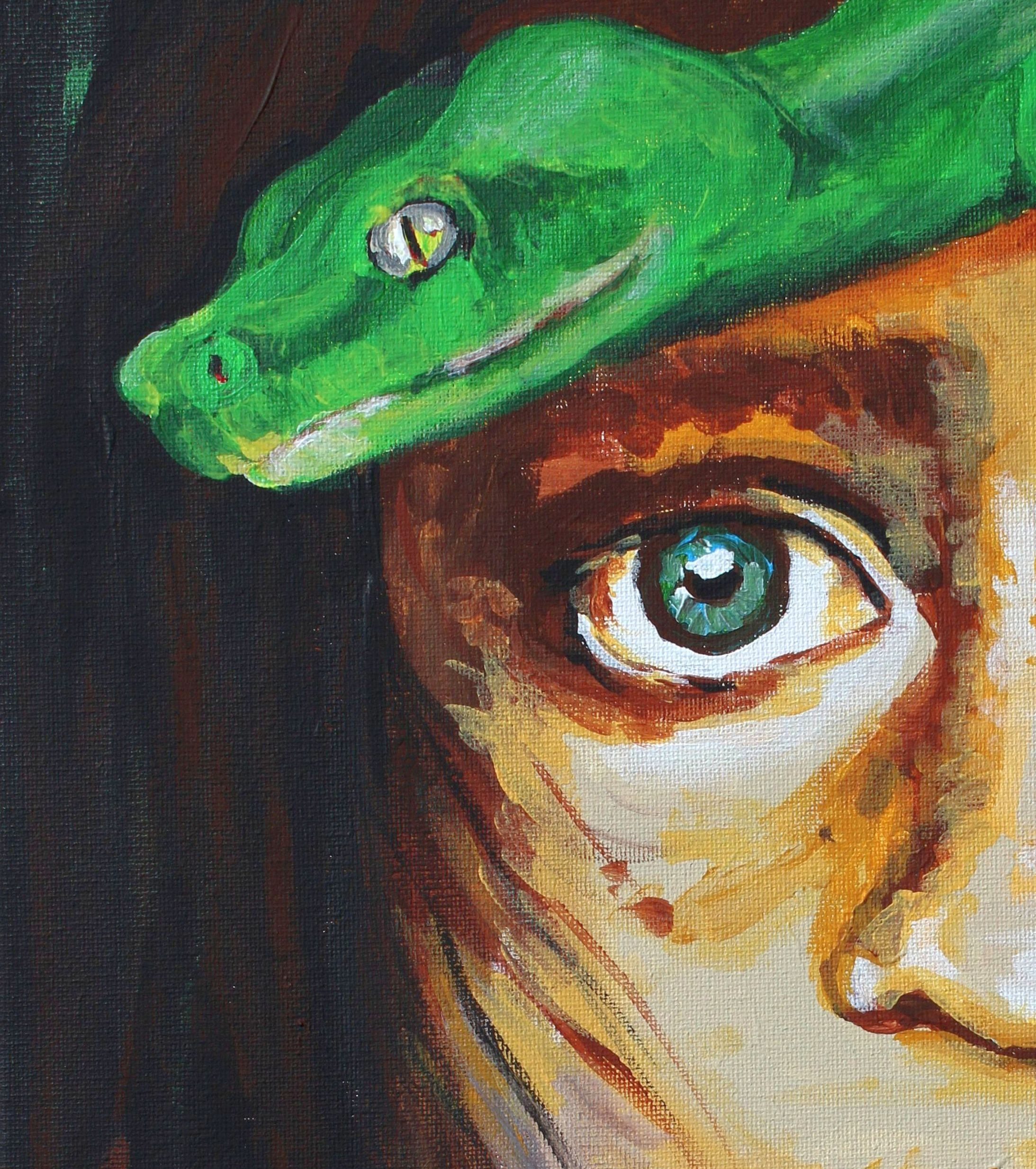
Image is in the Public domain.
 Heart of Flesh Literary Journal