NONFICTION
Eating Is Worship
December 8th, 2018
It was almost midnight. That month, I’d kicked up my nightly run from seven miles a night to eight. The Sonoran nights had dropped far below freezing, but after the first mile, I shed my jacket, partially because my body temperature was rising along with my exercise and partially because I knew heating the body utilized a significant number of calories. The body must work harder to heat itself when it has no shield between itself and the cold.
My journey to an eventual eating disorder had begun when I’d first moved to Sonora, Mexico, from small-town Illinois and my body had reacted with constant stomach upsets in the face of new cuisine and its new ways of being prepared. I was constantly lethargic and riddled with stomachaches for several months, and it all culminated in a night sitting beside the toilet, followed by a day in bed with an IV drip hooked up to my arm to deliver fluid to my body. The culprit turned out to be a parasite that required several hospital visits and medication adjustments, and in the following months, I became terrified of food and its potential to harm me.
Because I was eating so little, I began to lose weight, and because I was losing weight, the people around me began complimenting me, amazed at my drastic weight loss. At some indefinable point in the process, my refusal to eat food out of fear slowly morphed into an eating disorder perpetuated by the desire to lose just a little more weight, just a little more. In the process, brain overwhelmed with exhaustion and thoughts of weight loss, I had begun losing touch with God and with those around me, the decline so gradual I barely noticed it at first.
Now, on my nightly run, which was another avenue for weight loss, my phone lit up; someone must’ve messaged me. I ran past J’s house, glancing down at my phone. It was just an email, nothing I needed to —
Searing pain shot up my leg as I tumbled, and I let out a slight yelp as I went.
A slender rock had temporarily slid under my kneecap, dislodging it for the moment and sending pain radiating up and down my whole body. I hissed through my teeth and cradled my knee. The tears began to squeeze through my eyelashes, no matter how hard I was trying to keep them at bay, and I finally allowed them to shake me. They started in my shoulders first, and then a great sob dislodged itself in my lungs just like the stone that dislodged my kneecap, and I started to weep, not just for the pain but for the promise I made my anorexic sibling ten years ago when I promised I would never, ever, ever, ever develop an eating disorder.
I tilted my face up to the perfectly starry Sonoran sky and tried to find something there that would help me.
__________________
Later in December 2018
During the weeks following my injury, during which even taking a step involved a great deal of pain, I reevaluated my life decisions.
In a recent phone call with the missionary care counselor from the organization that had sent me to Sonora, I had been informed that if I did not improve my relationship with food, then my removal from the missions field would be considered (by whom, I wasn’t quite sure). Nestled in my bed at the end of a workday, I messaged my friend, I think God let me injure my knee so He could get my attention again.
Over the past few weeks, as my knee ached and groaned about the injury, I had begrudgingly allowed a couple hundred extra calories or so to slip into my diet, and because I could not purge them through exercise, the nutrients stayed there. My body was beginning to learn that it did not have to fight to save every bit of food that entered my belly. I still wasn’t getting my period — I had finally recognized what a dangerous sign it is for an entire body system to stop functioning — but my sleep had improved marginally, and I wasn’t quite so bone-weary every day. I still had a long way to go, but recovery was budding.
With the slowly-returning health came the return of other gifts I had long forsaken in the name of “losing weight.” I had not been cognizant of the fact that my eating disorder was costing me relationships, but as my body exited survival mode and tentatively took a step through the doorway of health, I realized, my gosh, I can actually concentrate on what people are saying to me. I had not known that sacrificing nutrition was a synonym for sacrificing presence. Now that my mind was neither whirling with calorie-counting nor having to slog through the fog of complete exhaustion, I could pay attention to the people around me. Conversations became more engaging. Laughter became more genuine. Life became more vivid.
My knee mostly healed (to this day, it still has the occasional sting of pain), and I began to exercise again, this time for the sake of honoring and strengthening my body rather than losing weight. I still wasn’t completely healthy — looking back, I see that I still wasn’t eating quite enough and was exercising just a bit too much — but in comparison with the life I had lived before, the person I became and the body I inhabited were miraculous.
__________________
Late 2020
“God, how can I worship You with my body?”
Having moved from the mission field in Mexico to that in Japan, I was seated beneath the pane of the skylight in my Tokyo apartment, which pinged with the quiet music of the rain. Hunched over my prayer journal, I wrestled. “I think I finally know what eating to Your glory means, for me, at least. Maybe it meant something different to the early church, but to me, it means making sure I am eating and exercising in balance so that my body is empowered to live the life that spends itself for You.”
But all the women around me are so skinny, and I want to be like them.
“I’m 5’10.” I’m naturally larger framed. If I starve myself and run too much, then I’m too weak to be present with the people You’ve placed in my life and entrusted into my care. I know what it is to be so physically malnourished that my spiritual life turns skeletal, too. I don’t want to go back there!”
But my tummy sticks out in that new dress I bought, and I know it wouldn’t have a couple years ago.
“You’ve gifted me with this fully healthy body — well, aside from the asthma, I mean. I can run and dance and speak and crouch down and stand up and lift things. Some people can’t do that. I should be grateful for the strength I have instead of wishing I were shaped differently!”
But the first thing people see when they look at a person is their body, and here in Japan, being skinny means so much.
“Help me to see that eating the next bite is an act of trust and worship!”
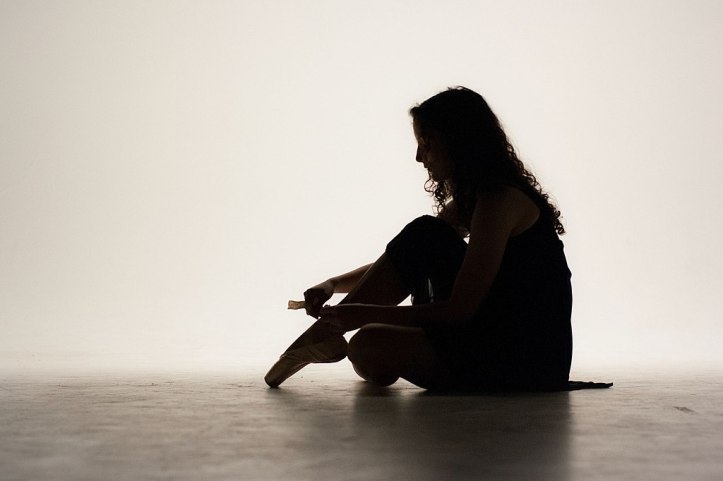
Desperate to find a way of exercising that would help me keep my body healthy without counting calories, I discovered a Tokyo ballet school online. Not only was ballet an activity where I would have no precise measurement of calories burned, I thought that, perhaps, it would be a way of celebrating my body through beautiful movement. I enrolled in the class, holding hope in my hands, praying for God’s help.
God answered those prayers mightily. Ballet class became motivation for staying healthy so that my brain would be able to concentrate on what I was learning. I nearly immediately recognized a direct correlation between how much I was eating and how well I was able to perform in class. For me, eating enough was absolutely crucial to being able to keep up with dance classes.
I began to count the blessings from God that I had gained along with some healthy body weight. Learning ballet. Going out to eat with friends. Being strong enough to tackle a half-marathon. Being mentally present in the English classes I was teaching. Possessing enough brain strength to continue learning Japanese. Most of all, worshiping God with heart, soul, mind, and body—each of these things became a reason for me to keep pushing through eating disorder recovery. How could I ever dream of giving them up?
__________________
Early May 2022
“You lost weight. You’re becoming beautiful!”
Shortly after a month-long battle against COVID-19, I met up with a friend I hadn’t seen in a few weeks. I was painfully aware of the fact that my illness had cost me some body weight. Even with a mask on, the loss was noticeable. I was desperately trying not to enjoy it, not to depend on it again. But at my friend’s words, something within me broke, and I teetered on the edge of relapse.
I’m becoming beautiful? How could my friend say that to me, especially because she knew my relationship with food had not always been a healthy one? I could not root her words out of my mind. They were on replay nearly every hour of every day. After several others commented on my weight loss, too, I took another step towards the precipice. I’m becoming beautiful? I’m becoming beautiful!
A well-meaning friend brought me bananas and granola bars at work. “Make sure you eat lunch,” she told me. “You’re looking a bit thin.”
Those words felt familiar and welcome. Like coming home.
A week later, during the middle of ballet class, my muscles told me they couldn’t handle it anymore. Whether because I was in denial or because my brain was not receiving enough nutrition to think properly — or perhaps both — I attributed my lack of energy to COVID recovery. Embarrassed, I ducked my head and slinked to the back of the classroom.
While the rest of the class practiced the petit allegro combination, my teacher found me. “I think you have low blood sugar,” he informed me before returning his attention to the rest of the class.
Stunned into silence, I sat there, something finally falling into place in my brain. Low blood sugar. Well, he’d know — he’d seen countless dancers in his dancing career. Low blood sugar. Two of the other dancers in the room had also gotten COVID, and they seemed to be recovering fine. Low blood sugar. My gosh, was I starving myself again?
On the train ride back home, I evaluated my amount of eating and exercise and was dismayed to realize that my eating disorder had crept back into my life, first using the excuse of illness (I truly had lost some appetite during the worst parts of being sick) and next using the excuse of still being unable to settle back into a healthy life rhythm since the illness.
But, God help me, I was “becoming beautiful.”
__________________
The following week
Once again, I spent my Friday night in the ballet studio, only this time, I was even less able to dance than I had been the week before. Last week, I’d made it all the way through barre exercises and partially through the center combinations. This week, I gripped the ballet barre until my knuckles were pure white and fought to keep my balance during frappes, a movement that is normally easy for me. I could feel that familiar brain fog again, the kind that had once ruled my mind for years as the eating disorder feasted on my energy.
My friend on the other side of the barre caught my eye. Are you okay? she mouthed to me.
I shrugged, averted my eyes, pushed through. My vision was blurry. I was making mistakes I hadn’t made in two years. I couldn’t even begin to understand my teacher’s Japanese instructions. Heart sinking with each mistake I made as we completed our frappes on the left side, I knew I couldn’t last through the rigorous center combinations, which were always difficult even when I was feeling healthy. When the time for taking a break and stretching came, I whispered to my friend, “I need to leave,” and packed up my things.
I made it all the way out to the benches outside the ballet studio before my tears finally caught up with me. Seated on a park bench, ensconced in the light of the streetlamps and lines of cars, surrounded by the nighttime noises of Tokyo’s hustle and bustle, my lungs let forth a great, wracking sob.
Am I really okay with this? Am I really going to throw my life away just because I want to be smaller?
In the distance, I heard the trains come and go, people living their normal Friday night lives as though my life wasn’t breaking apart in my hands in that very moment. I tilted my head up to the sky, to the Savior I had learned was always there, watching with His gentle eyes, and whispered to Him, “I’m not going to go back.” The stars were canceled out by the city lights, but I still found God’s Presence there with me. “Please help me.” On the train ride home, I pulled out my phone and texted the same plea to one of my best friends.
I did not return to ballet class that night, nor the following week. I wasn’t strong enough. Instead, I walked the riverbank of the Nogawa behind my apartment, conversing aloud with God and getting stared at because of it. My shoes wore out that gravel path, and the trees listened to my prayers, seeming to whisper their own at times.
Two weeks after that fateful night, when I returned to class and the teacher pulled me aside to inquire about my health, I answered honestly, “I’m not 100 percent better, but I’m better, and I’m going to try my best.” By God’s grace, I made it through the class.
__________________
May 2023
Recovery looks like pale skin returning to its natural glow. Recovery feels like all the extra energy you never knew you were missing rushing back into your steps. Recovery tastes like a big sushi dinner with your friends without feeling guilty for days afterwards.
My then-fiancé, now-husband, and I had been engaged for nearly a week. We were seated with two older Japanese friends at the restaurant table. I picked up my chopsticks and dipped my tuna sushi into my soy sauce, genuinely excited for its flavor, especially the burst of wasabi I had stirred into the sauce.
“[Japanese friend’s name] worked really hard the months before her wedding to lose weight,” one of our older friends told me out of the blue.
This was something I had already been contemplating since my fiancé and I had first begun talking about marriage. I shrugged and smiled. “I have friends who tried to lose weight before their weddings,” I answered. “They ate so little that on the days of their weddings, they were exhausted.”
God bless him, my fiancé changed the subject, and we began to discuss ministry in Japan or something else completely unrelated. My older friend’s observation and question remained in my mind, however, but in a different way than it might have done several years ago. Instead of thinking, Maybe he has a point and I ought to try to lose weight for the wedding, I thought, I can’t believe some brides add extra pressure to themselves to lose weight during a season that is already so stressful with all the planning and arrangements that have to be done!
In that moment, I realized that God had entirely shifted and healed my mindset. A comment that would have once triggered me into setting down my chopsticks actually served to reinvigorate my commitment to a truly healthy lifestyle, one that valued strength and energy and relationships above weight loss.
__________________
Eating enough is worship.
I recall meals I attempted to eat on my own during those difficult years; in particular, I remember trying to eat a small bowl of oatmeal, choking down two or three bites, and then bursting into tears and scraping the rest of it in the trash can, knowing I would feel guilty if I ate it and that I would feel guilty if I didn’t. To act against eating disorder-induced fear and choose to partake in a meal is an act of trust in God. The next time I ate oatmeal, I finished the whole bowl, whispering, “I give my lifestyle to You. I choose to supply my body with what it needs to live a life of love and engagement for You. I tear down my idol of food and exercise and return You to Your proper place in my heart.”
Eating enough is love for others.
As I began to recover, the truth dawned on me: my brain had spent years regularly attempting — and failing — to fully engage in conversation and comprehend the words other people were speaking. My body was too starved to function, too busy counting calories and attempting to stay awake. “I give my body to You. I choose to fight against malnutrition so that I can be present with these beloved people around me. I will not allow my eating disorder to rob me of the gift of sharing life with Your people.”
Eating enough is communion.
I had, for years, habitually declined dinner invitations because I knew that people would eventually notice if I wasn’t eating enough. I had decided that it was better to avoid social situations and remove the possibility of eating altogether. I missed wedding showers, friends’ gatherings, and restaurant invitations in the name of “self-control” — which was, of course, really self being controlled by fear. “I give my social fears to You. I have decided to accept the social invitations offered to me, knowing that enjoying a potentially calorically dense meal from time to time will not harm my body. I understand that food is a facilitator of friendship and that rejecting invitations doesn’t only starve me of nutrition, it starves me of connection, too.”
Eating is, above all, of and for the Lord.
I look at all the good things I needlessly sacrificed on the altar of my eating disorder and all the gifts I regained when I decided to worship at that temple no longer. My body has become not my enemy but my precious vessel through which I experience what I love in this life, by and for the grace of a God who was gracious enough to stop me in my self-destruction and gently lead me beside still waters to a better way. Psalm 37:23–24 declares, “The steps of a man are from the LORD, and He establishes him in whose way he delights; though he fall, he shall not be cast headlong, for the LORD is the stay of his hand” (RSV).
In my situation, though, we might say more accurately, “Though she fall on some Sonoran desert rocks to the point of injuring her knee and being forced to quit an unhealthy running habit as a result, she shall not be cast headlong, for the LORD is the stay of her hand.”
Rachel Lynne Sakashita is a blogger, language learner, and transcultural ministry worker who lives with her husband in Pennsylvania. Her work can be found at The Clayjar Review, The Truly Co., Calf Magazine, or her brand-new Substack, Ewe and Shepherd. Find her on Instagram at @abrightaubade.
Next (Sassette Liu) >
< Previous (Lea Gillespie Gant)
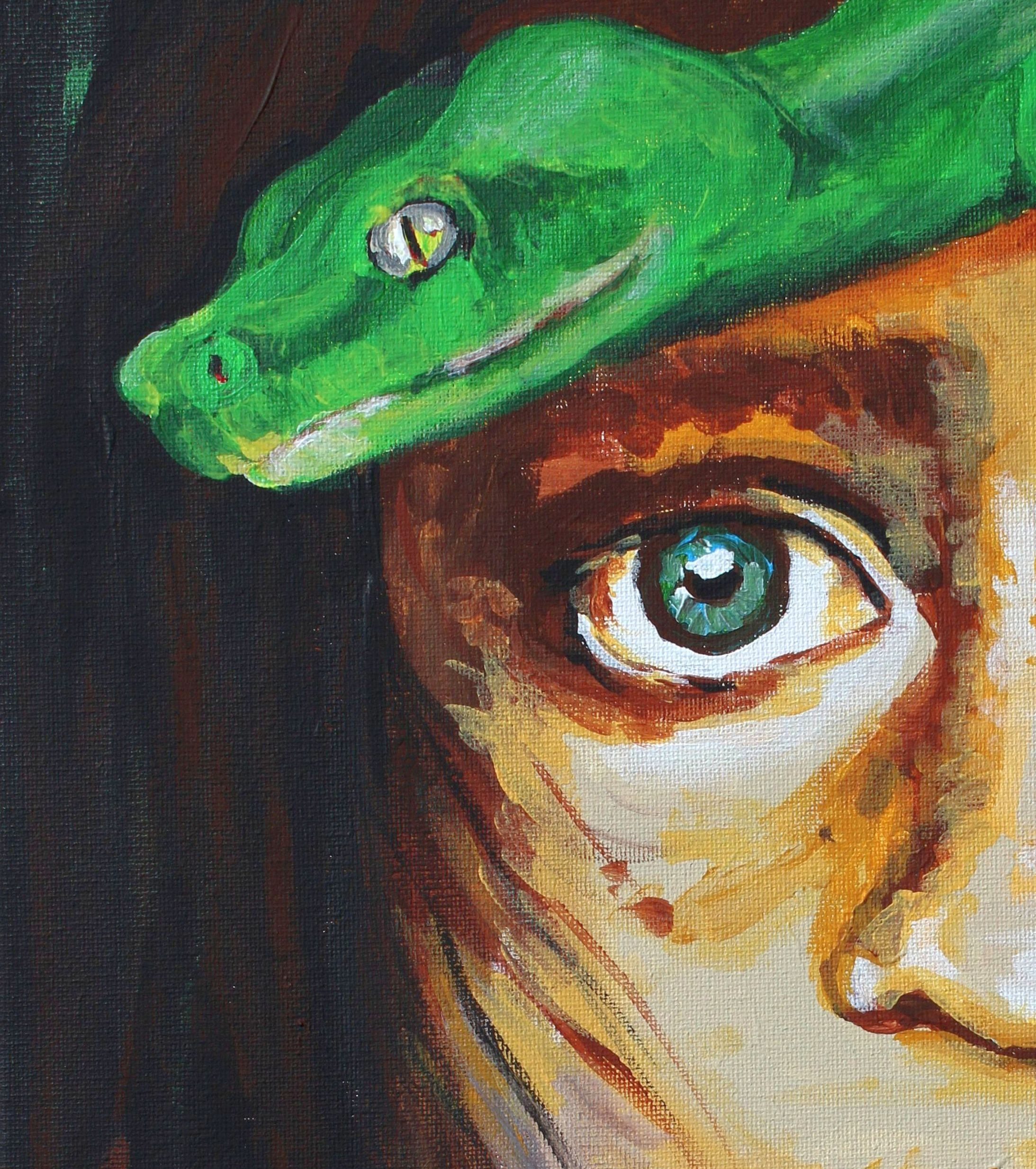
Image: Concentration by Tommaso Rollo, CC BY 3.0, via Wikimedia Commons.
 Heart of Flesh Literary Journal