NONFICTION
How to Want
I was twenty-six the first and only time I went to a therapist. I saw her for six months, and now, I couldn’t for the life of me tell you what all we talked about. I know, when I first started to see her, I was trying to convince myself I wanted to get a PhD. I know she helped me admit I did not, in fact, want to do that. I know she was one of the few people in my life who understood why, which is a mystery to me now, as she didn’t seem to understand much else about me. Or maybe it’s that her understanding was too severe, and I couldn’t take the searing gaze of it, having lately been wounded as badly as I’d ever been by a man who’d claimed to love me. I know that’s why I started seeing her — the man, his promise of marriage, his sharp U-turn, the numberless and namelessly cruel things he had said in the end to make me loosen my grip.
All of that had happened a year before the therapist. The man had met someone else, married her. I had quit my job, gotten a new one, started writing again after eighteen months of spinning my wheels in the mud. None of it mattered. I was as lost as I’d ever been, blowing around like a dead leaf on the autumn wind, just waiting for the moment when I could crumple to dust, become one with the earth, and begin again. It didn’t happen. My friends were at a loss — had been at a loss since the man and his promises had left me — and so finally, after much bemoaning, I agreed to their suggestion to go to therapy. It took me a number of sessions to tell that therapist about the man. What she was able to discern between the sobs and snot bubbles, I don’t know, but it was enough to make her nod and say, “This is it, then.” It was, yes. This had always been it.
I began imagining my future husband when I was six years old. While other girls were still trying to determine who did and didn’t have cooties, I was sizing up our male classmates to figure out who I could see myself marrying. Every interaction with every boy for the next twenty years would be the same: could I marry this guy? Sometimes, the answer had been yes. Every time, that yes had been one-sided. Twice, in early adulthood, I had thought maybe, just maybe, the feeling was mutual. If it was, he boomeranged away too quickly for me to find out. And then, I met the man. The feeling was mutual. The feeling was starlight, slow fire, rainbows refracted in a room full of prisms. How I had loved him. How he had made me believe that he loved me, too. How it all went wrong is a question I will never have answered, and so, at some point, I had to stop asking.
“You’re a romantic,” the therapist pronounced. I tried not to detect judgment in her voice, but I did, which was unfair. In general, my memory of her is of a woman who was extremely objective, who tried her best to guide me through the world as I saw it. Only once do I remember her veering from this position of neutrality, and it is sadly the only thing about our time together that I remember clearly. I was telling her about a man in my church group who I was trying to decide if I did or did not like, and in the middle of my stream of consciousness, she broke in and said, “How does God feel about your obsessive need to be in a relationship?” It was like having my head split open with a hatchet. I told her I didn’t know. She told me to ask Him — to close my eyes right then and there and ask Him. I did, and in my mind, I heard the words, “Let it go.”
My therapist was not a Christian. In retrospect, this was a grave mistake on my part — not because non-Christians have nothing to offer (I don’t believe that for a second), but because the problems I was having were so inextricably entwined with my faith that I know now I needed someone who shared that faith to help me untie the knots. Instead, I had this woman with her neutrality and her objectivity, who treated my beliefs like anything else about me and not the foundation upon which my entire worldview had been built, however shakily. Was my need obsessive? Of course, it was. I was profoundly lonely. I always had been. I had an emotionally absent father and an anxiety-ridden mother, a family who existed like planets in orbit around a center of reluctant tolerance. I was a writer, a brainiac, a weirdo. For years, I had watched everyone around me pair off, and ever since puberty, I had lived with a pervasive fear that had all but calcified into a certainty: that such good fortune would never befall me.
But it had. For one bright, blazing, incandescent moment, it had — and then, it had been ripped away, and I could not, for the life of me, figure out what I had done wrong. But now, I had an even bigger problem: I had learned what it felt like to be loved. Even if it had been a lie, it did not change the moments when I had believed that it was not, and I knew — with such fervent certitude it terrified me — that I would never again be able to pretend that love was not what I wanted. That’s what I had done for most of my young life: while my tender heart nurtured fantasies of happily ever after with many a man who caught my eye, my mouth proclaimed to anyone who would listen that I had no interest in dating, marriage, the whole great mess of it. It was self-preservation — if I remained alone (as I was all but convinced I would), then no one would have cause to pity me because I was perfectly fine being on my own.
About eight months before I met the man, I had started to truly follow the Lord — to figure out what it meant to be a Christian, instead of just calling myself one. And one of the first things God went after was this habit I had of speaking out of both sides of my mouth. It was God who told me this duplicity wouldn’t do — that the lack of honesty was making me more miserable than people’s pity ever would, which, of course, was true. And I learned it was true over the next eight months, as I slowly, hesitantly, fearfully also learned to tell the truth. And then, I met the man, and I thought all my truth-telling had been rewarded. But if our combusted relationship had indeed been my reward, I decided I was better off lying. I was better off going back to school to get my PhD, burying myself in books like I had my whole life, and burying along with me any desire for companionship, happiness, the whole great mess of it.
But I didn’t want a PhD. I wanted a husband. And even after the therapist pronounced my want as “obsessive,” and even after God, I believed, told me to let it go, my want did not change, and I did not let it go — not the way the therapist had wanted me to. Instead, I did what I had, over the last two years, been learning to do: I surrendered my want to God. That was eleven years ago. I have brought my want to Him and laid it down over and over and over again. I have met other men and had my heart handed back to me over and over and over again. None has trumped the level of hurt and deception of the first man, though the most recent one came close. None has bruised me so badly that I didn’t eventually come crawling out of the wreckage and admit — though God help me, how I wish it weren’t the truth — that love is still what I want.
How I wish it weren’t the truth. How I wish my lies had taken root, that I was perfectly fine being on my own because, God knows, I’ve been doing it long enough now. You’d think I’d be used to it. But I’ve never gotten used to it. I’ve never stopped wishing I didn’t have someone to do the dishes with, to make decisions with, to share a home and a name and a bed with. I’ve never stopped wanting to crumble beneath the weight of my self-sufficiency and independence. And I never stopped feeling guilty about it. “Guilty” may seem like a strange word for all of this, but it’s the true word. “Obsessive need,” the therapist had called this want of mine. “Let it go,” I believed God had told me, and I know now that He had told me that. He had, and I obeyed — I laid it down, only to watch it rise again, just as it’s risen again every time I’ve laid it down since. Because that’s what things do when they’re meant to live.
In the beginning, God created the heavens and the earth — the water and land, the plants, the birds, the animals. And then, He created us. Though it is purely my own interpretation, I believe we, men and women, were originally created as one being — the adam, mankind, humanity. And over His good and new creation, the first thing God declared was not good was that the human was alone, and so, He caused the human to go to sleep, and then, He split us in two. Man and woman, together, make up the image of God. We were never created to exist without each other. This is not to say that every man and woman must marry, nor is it to say that we are not each human beings within our own rights. It is only to say that man and woman, together, in love, was the first human relationship God ever created, and we are fooling ourselves if we think that’s insignificant. Nothing God does is insignificant.
“Obsessive need,” fine. I give. It is. But it’s not as though there isn’t a reason for it. It’s not as though I’ve spent these thirteen years following my good and gracious God, trailing an errant, erratic desire behind me, which He will one day lop off like a vestigial tail. It’s not as though I haven’t tried to get Him to lop it off. But God is not in the business of lying, and I understand now that He’s never going to let me be either. All I have is the truth, obsessive though it may be. All I can do is bring it to Him, this want of mine, and ask Him to satisfy it. Have I learned to hold it loosely? Of course. I have learned to hold most things loosely in this world of loss and uncertainty. But still, I hold it. Still, I carry it — this unwanted, unasked for, but undeniable hope that, one day, the starlight will find me again, and this time, it will stay.
Jessica Lynne Henkle is a writer and editor who lives and works in Oregon. Her first book, Without Your Father, is forthcoming from Unsolicited Press in 2026. You can visit her at jessicalynnehenkle.com or follow her on Instagram or Substack (both @jessicalynnehenkle), where she (semi-frequently) posts micro essays.
Next (Milla Jade Kuiper) >
< Previous (Victoria Stewart)
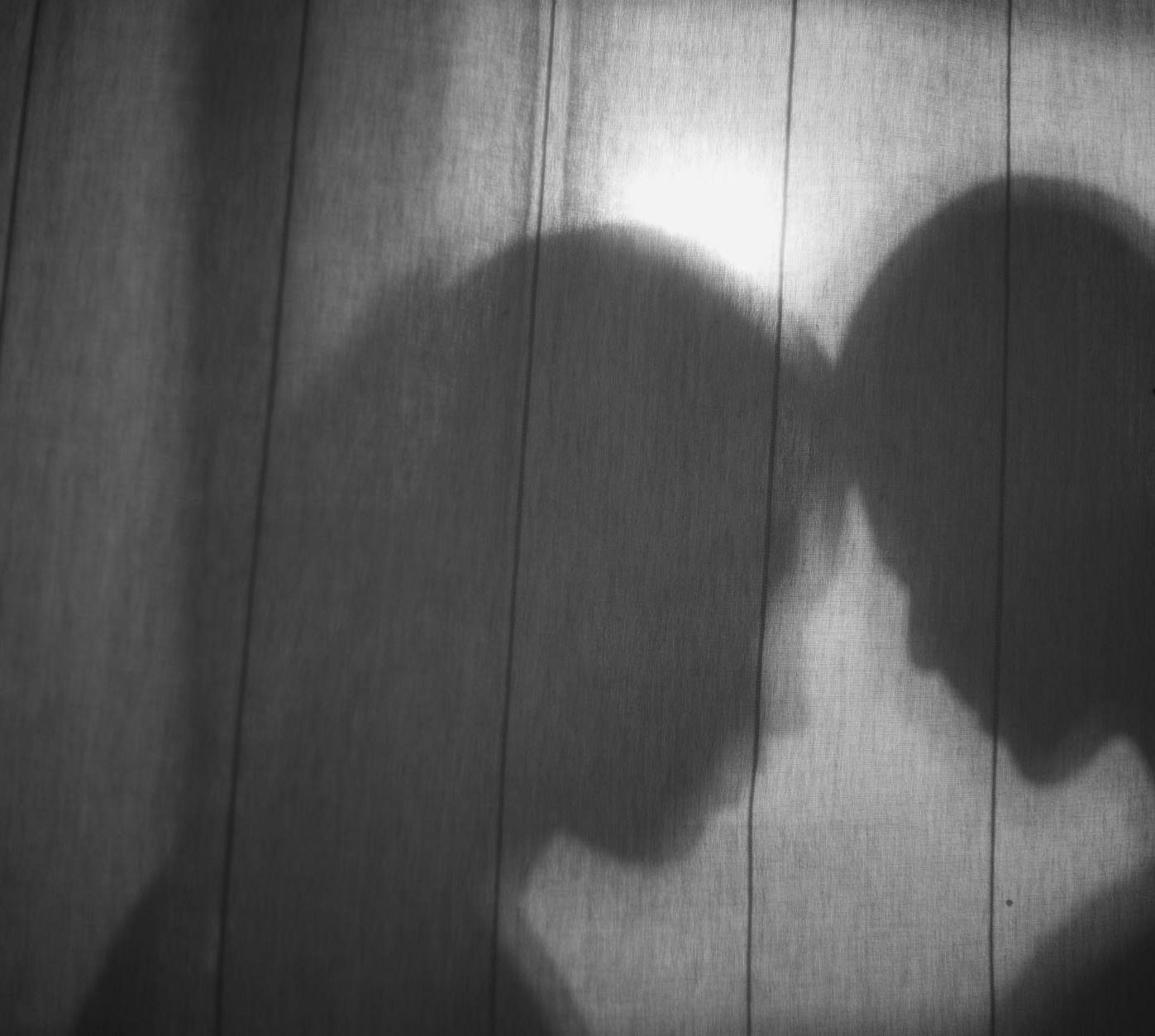
Photo by Yaroslav Shuraev on Pexels.com.
 Heart of Flesh Literary Journal