NONFICTION
A Close Call
Before arriving as newly minted missionaries in Guayaquil, Ecuador in 1993, my wife Lil and I had read the guidebooks about its reputation as a dangerous pickpocket mecca. Others who had lived there before warned us about the prevalence of armed assaults and violence. Their words had the desired effect, and on my first visit downtown, I walked the crowded, chaotic streets like a rabbit under the watchful eye of an eagle. I was on the alert, and everyone coming towards me looked suspicious. I felt like a spy in a John Le Carre novel, stopping to look for reflections in store windows to make sure no one was following me. As advised by a guidebook, I moved my wallet to a front pocket and shoved various bills inside my socks for safekeeping. But, as nothing happened on that or on subsequent visits downtown, or in our neighbourhood, I grew more confident and less anxious. I was always aware of the potential dangers, but I acted as though nothing would happen to me.
The most notorious areas of the city were the “invasiones,” or squatter areas infamous for their lawlessness. I remember the first time I saw one, with its tiny houses built of a mixture of grey cement blocks and thin bamboo walls clinging to the side of a steep hill. My friend described it as a neighbourhood that was illegally occupied as families squatted on small plots of land belonging to someone else. They were called “invasiones” because when dozens of simple, hurriedly erected shacks appeared in a day, that is what it seems like. In the case of the first one I saw, it occurred over 20 years earlier, and it was by then well established. My friend also told me new communities like it were springing up all alongside a new road called La Perimetral as it circled the outskirts of the city. Hundreds of thousands of people called these new slums home. I started talking to God about how I could reach some of them with the message of hope Jesus came to bring. Soon after, the leaders of the church we attended in town invited me to join them in starting a new Bible study in the home of a family in La Bastión Popular.
I leapt at their invitation. Bastión Popular represented the kind of place Lil and I believed we were called to serve. We went to Guayaquil as missionaries with our three small children, after having served in prison ministries for almost 10 years. Isaiah 58:10-121 was a passage of scripture that motivated me to go to those on the margins of society, to those whose existence would be characterised as outcasts or disadvantaged.
Those Sunday afternoon studies became popular in the host’s neighbourhood. Some of the group asked me to visit more often, and so, within months, one visit a week had become three. They were exciting days of discovery for me as I walked around and was introduced to many who would later become friends. My connections spread from the initial neighbourhood in Block 6 to as far as Block 10. I was spending hours walking around to visit different families, where I would talk about Jesus and His love. Despite its reputation for danger, most of the people I met there assured me I was safe during the day. No one recommended I walk alone after dark.
On one occasion, I got back to the house where I stored my motorcycle, and the sun was very low on the horizon. To get from my home to Bastión was either a 40-minute ride along heavily trafficked roads or about 20 minutes travelling over back roads, including one stretch of a dirt trail connecting two different neighbourhoods. A friend came out of his house to speak with me while I unlocked the bike and put my helmet on. I asked him if he thought it would still be safe enough to try the dirt track instead of going the long way on the main road. His counsel? “Better not chance it, it is too late.” I thanked him for his advice, but decided not to follow it after I got going. I was confident my jiggling headlamp and the dull light in the sky could help me navigate the path until I was again at a paved main road.
About 500 metres along it, the front wheel of the bike smacked up against a huge rock that unexpectedly emerged out of the blackness. I swerved and missed most of it, catching it on an edge. That impact was nearly enough to rip the handlebar out of my hands. The bike wobbled and zigzagged, and I almost lost control. At the same time, I heard some shouts coming out of the bushes lining the trail and noticed three or four dark shapes rushing toward me. I jerked the bars and avoided a second strategically placed boulder while speeding up to escape the grasp of the men now chasing me. Thankfully, my front tire didn’t rupture, there were no other obstacles in the way, and I could navigate the rest of the dirt path before reaching the illuminated highway. With hands shaking, my mind was on auto-control and I don’t remember the rest of the ride home.
It was a close call. I thought a lot about what could have happened to me if the bike had fallen or my tire had burst. God was gracious in limiting it to a non-violent learning experience. When I later confessed to my foolishness in not listening to their counsel, my friends from Bastión told me that that shortcut was well known for the number of assaults and even murders that took place after dark. I had grown cocky and after a few short months felt I knew better than the ones who lived there. I suppose, somewhere deep inside I believed God would protect me, and He did. I now see my foolishness in ignoring the advice I was given was not unlike the testing that Satan tried on Jesus after leading him to the pinnacle of the temple and suggesting he throw himself off. I didn’t have the right to paint God into a corner like I did.
Sometimes putting God to the test is more about us than it is about God needing to step up and prove himself. It can be to satisfy a selfish need for reassurance. “Answer my prayer or else!” we might not say, but can feel. When Jesus taught us to pray, He included the phrase: “your will be done on earth as it is in heaven.” I need to remember that every day.
Jesus didn’t need any reassurance. At one point, His Father spoke with an audible voice, and Jesus told His disciples it was for their benefit, not His. Although I may not enjoy the depth of intimacy Jesus shared with His Father, I shouldn’t need reassuring, either. God proves His commitment to me, even in the simple act of giving my lungs the ability to expand and constrict 25,000 times a day. He doesn’t need to prove how much He loves me. He has proven the depth of His commitment to all of us by choosing to visit the world in the person of Jesus. We have a God who became one of us, who put up with all our foibles and even subjected Himself to our foolish pride and inhuman cruelty on Calvary. His love is that deep.
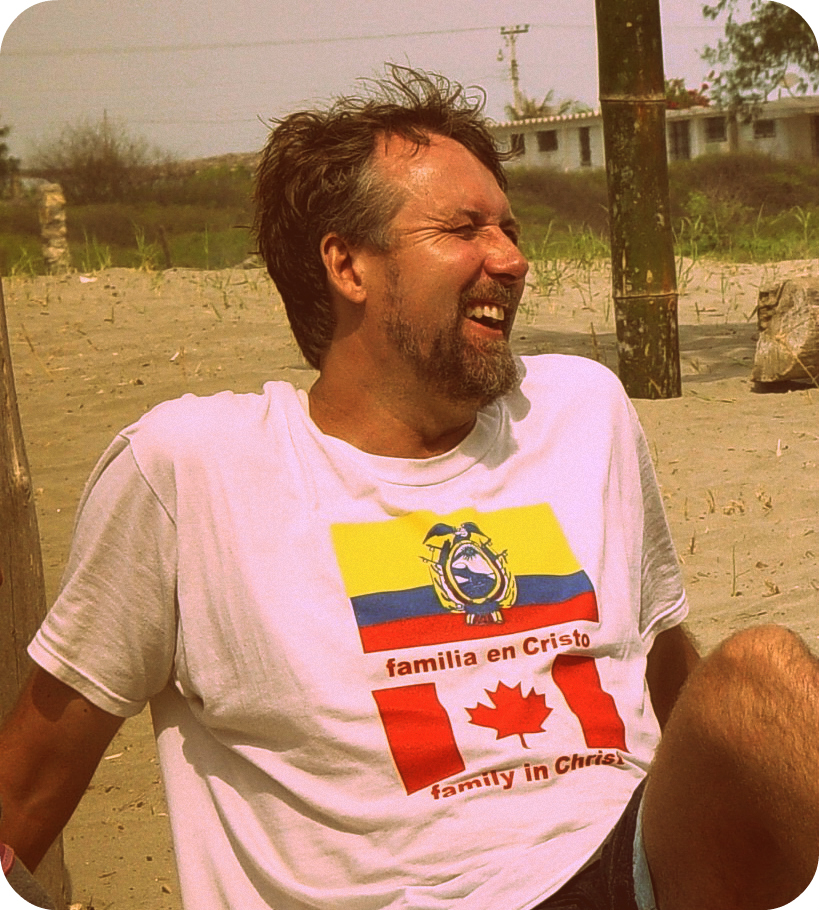
Timothy Horne: My career path has taken me from Christian ministry in Canadian prisons, to Guayaquil, Ecuador as a Community worker in a church setting. I recently retired from my career as an Outreach Worker in the field of mental health and addictions. I now live and write in Dartmouth, Nova Scotia.
Next (J W Goossen) >
< Previous (Milla Jade Kuiper)
Image is courtesy of Timothy Horne. All rights reserved.
 Heart of Flesh Literary Journal