FICTION

Signs and Wonders
As the young woman took up her position on the cracked sidewalk, tremors spidered up her ribs and across her torso, portents before a quake. Shaky hands nearly dropped the sign she held. She placed an unsteady foot onto the space indicated by Sister Miriam’s knobby finger.
“That can be your post,” the aged religious said with a smile as cracked as the sidewalk.
A Subaru whispered past and through the intersection.
The young woman nodded, then checked herself. Why was she always agreeing to everything Sister Miriam suggested? That habit had landed her in this situation in the first place. She wondered, was that a power Sister Miriam possessed or a weakness in herself?
Her shoulders twitched. The coolness of the autumn air did not explain the shiver. Indeed, despite the chill she was perspiring. Her outdated glasses, with their loose temples and overstretched pad arms, kept riding down the slope of her nose on a slick of anxiety, leaving her world a blur. The extra weight she had acquired in the six years since college only made things worse. Even brief walks like the one from her car to her ‘post’ caused her skin to prickle. Still, she no longer yearned for her former figure. That body had not exactly served her well in ways she had worked hard to overcome and no longer dwelled on.
“Guard it well!” With a single twist of the wrist, Sister waved and was off. She chuckled like crumpling parchment paper as she walked back the way they had come. Her movements were slow, yet she left an impression of latent vigor. As if under the right conditions she could drop her cane and swoop through the air like a hawk after a mouse. It left the young woman torn between wanting Sister as an ally and being somewhat afraid of her.
Sister Miriam’s black habit dissolved into obscurity. Wondering for the hundredth time why she was subjecting herself to this risk, the young woman used her free hand to move her glasses back into place. She usually welcomed opportunities to combine her piety with worthy deeds, but this was different.
With the world once again in focus, she began to explore her surroundings. She stood at the corner of the intersection. The avenue in front of her was lined on both sides with people holding signs similar to hers, slogans out of sight for now along their legs. Some stood in clusters, chatting before the event started, as if this were normal and not an enterprise fraught with danger. Beyond the avenue, a stand of maple trees clustered, their yellow, orange, and red leaves like stained glass in the bright fall sunlight. She breathed in. The air carried the scent of the slowly waning year on musty fingers. There would be few weekend days left like this, she thought with regret.
An eruption of shrieking voices to her left caused the young woman to snap her head around in alarm. The slack glasses nearly flew off her face. She scoured the pavement. There was no danger, just two teenage girls exchanging an excited greeting. She rolled her eyes.
As if in response to some unseen signal, the quiet chatter around her ceased. The knots of people smoothed out, spacing themselves like beads on a human rosary. One o’clock, she thought.
With trembling hands, she raised her sign until it fully covered her face. She fought to regulate her breathing, seeking confidence in what Sister Miriam had told her earlier: This is a silent vigil, dear. We don’t yell or chant or even sing out loud. And we certainly don’t engage with anyone. Not even if they’re supportive. Just smile and nod. The thought calmed her. Anonymity was her main goal this afternoon. That and doing a worthy thing. She had no intention of making eye contact with anyone not here for the rally.
She looked over the top of her glasses and focused on the small print covering the back of the sign. Prayers, Sister had explained, to help the ninety minutes not drag so. She shifted her weight and settled into the first one. She navigated the prayers with deliberateness, though not full satisfaction. It felt less effective to pray with her hands apart. She liked to press her palms together, fingers extended. It was a more reverent way to pray. Reverence was an important part of her new life.
After the last prayer, she glanced to her right, across the intersection. The others stood silent, faces pleasant, signs at waist or chest level. A few were running rosary beads through their fingers. The young woman slid her right hand until it held the middle of the top edge of the sign. With her left hand, she nudged open the zipper on her crossbody bag. She had stocked it with an arsenal of prayer cards and her rosary, which she now pulled out. A gift from the Holy Land, it was a plain string of oblong olivewood beads, but it had a silver locket of Jerusalem soil as its centerpiece. That’s what made it so special.
She moved her hands back into place, the rosary in a clumsy grip against the corner of the sign. After reciting the introductory prayers, she started in on the Resurrection — fingering beads worn smooth and shiny by skin oil and desperate petitions. But after only two Hail Marys, her mind drifted back to Sister Miriam. Since arriving last year to run the parish school, Sister had, for some unexplained reason, taken an immediate interest in her. In turn, the young woman had responded by accepting every one of Sister’s invitations, despite her feeling of unease. It was like a child’s desire to win the approval of a parent reined in by fear of the demands that approval might bring.
Despite her misgivings, those occasions had afforded her the opportunity to exercise piety in her new life by doing worthy things. They had also, up until now, been within the safety of the parish. This city-wide Life Chain, on the other hand, put her on display for an hour and a half for all the world to see. Sister had reassured her that heckling was rare, but passing taunts were not the young woman’s fear. What terrified her was being recognized and called to give an answer later. Even hidden behind her sign, she felt naked and exposed.
That had not always bothered her, but she drove those memories back into their hole.
Sister had been pleased to see her turn up today. Thank you so much for letting me rope you into this, dear. A beautiful day for it, isn’t it? She had smiled in guilty agreement. It felt like stealing to accept Sister’s thanks when, in fact, she wished she were anywhere else but here. Not that she was unsupportive of the cause. She donated money to her local Right to Life chapter and prayed novenas for an end to the slaughter, like a good Christian should. And she told herself she had sympathy for the women who found themselves in difficult situations, even if it were the result of their own poor choices. Of course she did. Even though she knew she herself could never be so desperate as to kill her own unborn child. No, it was not the cause or the taunts she wished to avoid, but rather the exposure by a colleague or administrator driving past and recognizing her. In today’s climate, that could lead to embarrassing comments or even an uncomfortable meeting with her principal. Worse, some of her middle schoolers might catch her between texts as they rode with parents to the sporting events that had usurped the church as the locus of family and communal life on Sundays. Middle schoolers could be thoughtless with their comments, unfiltered in their lack of boundaries. If they saw her here, the little beasts would use any excuse tomorrow to derail instruction with their merciless questions.
Six years ago, on the Ash Wednesday of her first year of teaching, she had attended the distribution of ashes on her way to school. It was part of the new life she had started with her new career, one in which piety took priority. Several of her students had been there, as had a few of her colleagues. She had smiled at them, eager to exchange a sign of solidarity. Had imagined them all with crosses painted on their foreheads, catching each other’s eyes throughout the day with knowing winks.
The students had looked away.
She had received her ashes and made it to school just in time for first hour. Students entered the room, giving her the same puzzled look and the same lame questions. From the blunt: “What’s that smudge on your forehead?”, to the helpful: “Did you know you have something on your … like, right here?” Even one clueless: “Why do you have a cross of ashes on your forehead?”
To her chagrin, none of the first-hour students she had seen at church came to class with their ashes but rather with shiny red patches where they had scrubbed the sign off at their first opportunity.
Support had finally come from Kelsey Sommerton. The popular eighth-grader — developed beyond her age in both intellect and physique — had curled her lip in disdain at her classmates’ ignorance. “It’s Ash Wednesday, you morons. You know — Lent?”
The young woman had appreciated Kelsey’s intervention. Nothing shut down adolescents like the contempt of a respected peer. Nevertheless, she had rushed to the staff bathroom after class and reemerged with her own shiny red patch. She passed one of the colleagues she had seen at church, his forehead also clean. They both averted their eyes. Now she always attended an evening distribution.
She had lost track of Kelsey after middle school, as she did with all of her students. It was enough to worry about the new crop she was saddled with each year. And after her Lenten experience, she knew her heart would never break for any of them. They were difficult to like on the best of days. Most would be insufferable if they knew she was here.
And so she held the sign as her invisibility shield. Of the five different options Sister had offered her, she had chosen this one. Large blue capital letters spelled out EQUAL RIGHTS FOR ALL. Sister had approved. Ooh, that’s one of my favorites. You know how to choose one that cuts right to the core of the issue. The young woman did not know about that. It was the text she felt least likely to provoke a negative reaction, as it fit the general inclusory mood of the culture.
A current of air carried the fatty smell of french fries from a nearby eatery. Her stomach growled, and she wondered if she could sneak off early without Sister noticing. She realized she had not only lost track of what bead she was on, but which mystery. With a sigh, she started all over. No point in doing it if you don’t do it right, she admonished. She tried refocusing, tried to step back into the world bounded by the dimensions of her sign and resting on the solidity of the beads and the safe predictability of her virtuous practice. But she could not ignore the engines simmering collectively at the red lights, like pots on the verge of boiling. At one point, she caught herself repeating Please don’t let them see me on each bead, until the light turned green again and the cars revved away. She started over and wished Sister Miriam had given her a spot that allowed her to exercise virtue with less risk.
At last she managed to get through the mysteries and then her litany of dismount prayers. Once more, she performed the hand dance to deposit the rosary. A chaos of honking almost made her drop the beads. Not cars, thankfully, but a flock of Canada geese low overhead. The young woman adjusted her glasses and looked up, tracking them as they passed by in a watery V-formation. They knew when it was time to go. She smelled the fries again, their promise of crispy, salty comfort. She started to lower her sign, but then stopped, imagining the look of disappointment on Sister’s face. She would treat herself to the fries as soon as this was done.
The thought of Sister’s face reminded the young woman of an incident at Adoration last Wednesday. She usually covered the four-to-five slot after school. At Sister’s suggestion, of course. She had no family to rush home to, so it was easy for her to head to church every Wednesday after work and spend an hour in front of the exposed Blessed Sacrament. She considered that hour her mid-week respite from the stress of the students: the old stone church, quiet and tranquil; the gentle patter of water circulating in the baptistry, bouncing soothing echoes off the high arches; the suggestion of not-quite-dissipated incense. She brought her collection of prayer cards, recited her rosary. She performed her commitment with palms pressed together. Just for good measure, she always stayed at least five minutes over her hour, then went home to a pre-made meal from Aldi.
This past Wednesday, Sister had been there as well, sitting in the back where the young woman usually sat. The young woman chose a pew directly across from her so that she could observe her at prayer. The look on Sister’s face had confused her. It was like a grimace, but also ecstatic. Like she hung in a mystical moment after her heart had been pierced with an arrow of love. A tear traced the contours of her cheek. The young woman could not imagine pain or wounding as a positive encounter with love. She had only ever experienced pain as a negative — but inevitable — consequence of giving her heart away. Sometimes more than her heart. Neither Adoration, nor Mass, nor prayer was for her an ecstatic or mystical experience. They were simply appropriate ones. Worthy and beneficial, though occasionally unsettling. She had shifted her gaze from Sister to the Consecrated Host. As always, it glared out of the monstrance like a great pale eye, reaching over the intervening pews and boring into her soul. Ashamed of what it would see there, she had averted her eyes and redoubled her prayer effort. This happened every week, but she kept coming back. It was a sacrifice, a penance, and like her other pious practices, she embraced it so that in the end she could hear the words “Well done, good and faithful servant.” But last week had made it clear that Sister saw something more, something she was obviously missing. She wondered what that could be.
Shrugging off these thoughts, she flipped through the prayer cards, extracting those for the four novenas she was currently praying. Novenas were good. Like the rosary, they gave her a sense of solidness and continuity. Pinning the cards under her right thumb, she rezipped the bag. Over the top of her frames, she focused on the first card — a novena to St. Joseph — and began to read the prayer.
The day settled cat-like into its afternoon lull, the thin Sunday traffic purring in time with the changing lights. She worked her way through the St. Joseph card, praying all nine days for good measure. Occasionally, a car honked. Whether in support or disagreement, she could not tell, but she always reacted by clutching the paper sign with renewed desperation. Its corners were now damp and scalloped by her sweaty fingers. Twice she heard a “Thank you,” and once “Amen.” But no one yelled, or swore, or got out to accost her.
After Joseph, she prayed the other cards, unable to shake the persistent thought that she was missing something important. The fourth card was the Surrender Novena, the one Padre Pio’s spiritual director had written. This novena was an old friend from her first years of teaching. She had found great solace in it back then. Jesus, I surrender myself to You. Take care of everything. She had repeated that prayer enough times over the years that it seemed like He had. In her six years in the classroom, the bad thing had failed to happen.
They say that what goes out on the internet stays there forever, including videos that young women allow their boyfriends to record, “just for us.” With no thought that those videos would become weapons of revenge. Mines floating in cyberspace, waiting to detonate at the most embarrassing moment. Silly, worldly young women who believe that lifelong love is possible, but only after numerous short-lived encounters that end abruptly. Women convinced that it is simply the normal price — no hard feelings. Her greatest fear in those early days of her career had been that some of her students — or worse, their parents — would surf into the mine containing her image. She had changed her hair, put on weight, and switched from contacts back to these old glasses. When she discovered the Surrender Novena, she had prayed it daily.
Her pious efforts had borne fruit. Last year, she finally stopped having nightmares about entering her classroom to find her students gathered around someone’s cell phone, gasping in horror or laughing in mortified glee. Or having a father sit down across from her at parent-teacher conferences, take a good look at her, and jerk back in embarrassed recognition. Each prayer card, each rosary bead was a little sponge, soaking up the shame. Unlike Sister Miriam, faith for her was not the ecstasy of a medieval saint but the hair shirt of consistent dedication to the routine, its rhythms, its guardrails. Piety was an iron instrument for blunting the jagged edges of her past.
And so the young woman stood on the sidewalk and leaned into the prayer, hoping that what had protected her from shameful recognition in the past would ward off consequential recognition today. Indeed, it looked as though the ninety minutes would pass without incident and that she could soon get her fries and go home, satisfied that she had done something worthy.
So lost was she in the novena’s repetitions of surrender and her sense of relief that at first she was unaware of the voice. It took her a further moment to register that the voice was addressing her. Menacing as a growling cobra, jagged as broken glass, it sliced through her prayer and forced her attention.
“Hey, I’m talking to you, bitch! You, hiding behind that sign. Don’t talk about equal rights. Not when you just want to deny me mine. Don’t ignore me, you coward! What about my right to choose what I do with my body?”
The young woman convulsed from shock and panic. The movement sent her glasses once again sliding down her nose. The voice continued hurling abuse and challenges. She did not need Sister Miriam reminding her not to engage. She kept herself concealed behind the protective barrier of the paper. She prayed for the light to turn green. The pad arms of her glasses ran out of skin surface to cling to. The metal bridge touched the furthest extremity of her nose.
“You can’t force your morality on me!”
The young woman squinted her eyes and tensed her face, as if anticipating a blow. The movement caused the bridge to lose contact. The temple tips began to release their hold on her ears. She reached up to grab at the glasses, an involuntary reflex, letting go of one side of the paper. An ill-timed gust of wind, absent all afternoon until now, lifted the sign and tore it from her distracted grasp.
“You traitor! You moron!”
The sign brushed her face, knocking her glasses to the pavement. They landed with a crack and broke. She dropped on all fours to retrieve the pieces, as if they could provide protection in the absence of the sign. A car moving through the intersection on her right honked in irritation. She snapped her head around in time to see her sign slide up and off its windshield.
She glanced back at the car in front of her, not wanting to, but unable to stop herself. A woman younger than she stared back at her. Her face was contorted with rage, ugly with hate. It was a face she nevertheless immediately recognized, even without her glasses. She remained frozen on hands and knees.
“You!” both women exclaimed in choral wonder.
Kelsey was six years older, six years harder. The woman wondered what had happened to turn the girl who had once been her hero into the rabid caricature that had just accosted her. Oh mercy, mercy, she thought. What has become of her?
“Whoa, dude! Check it out!”
A second voice came from the open rear window. A young male glanced alternately between her and the screen in his hand, which he pointed at excitedly.
“Dude, it’s totally her! That’s her face. She’s even in the same position!” He laughed and handed the phone forward to the young man behind the steering wheel.
Kelsey’s face was still frozen.
The woman ducked her head and stood up, leaving the glasses. Clutching at the purse with her prayer cards and rosary, she turned to go.
Behind her, the boys were laughing, whooping. “Work it, baby!” The engine revved to a bubbling roar and peeled out across the intersection with an accusing shriek of tires.
The woman took a step. Tears burned acid streaks down her face as her heart broke for the young woman she once knew. A touch on her shoulder stopped her. She turned back and into Sister Miriam’s thin, strong arms.
Brian G. Smith is a retired secondary educator from central Michigan. He believes Beauty can be found even in the midst of life’s messes. However, he prefers to experience it from the hammock in his backyard. Brian’s work has appeared in Teach. Write.: A Literary Journal for Writing Teachers.
Next (Mark Paalman) >
< Previous (Cody Adams)
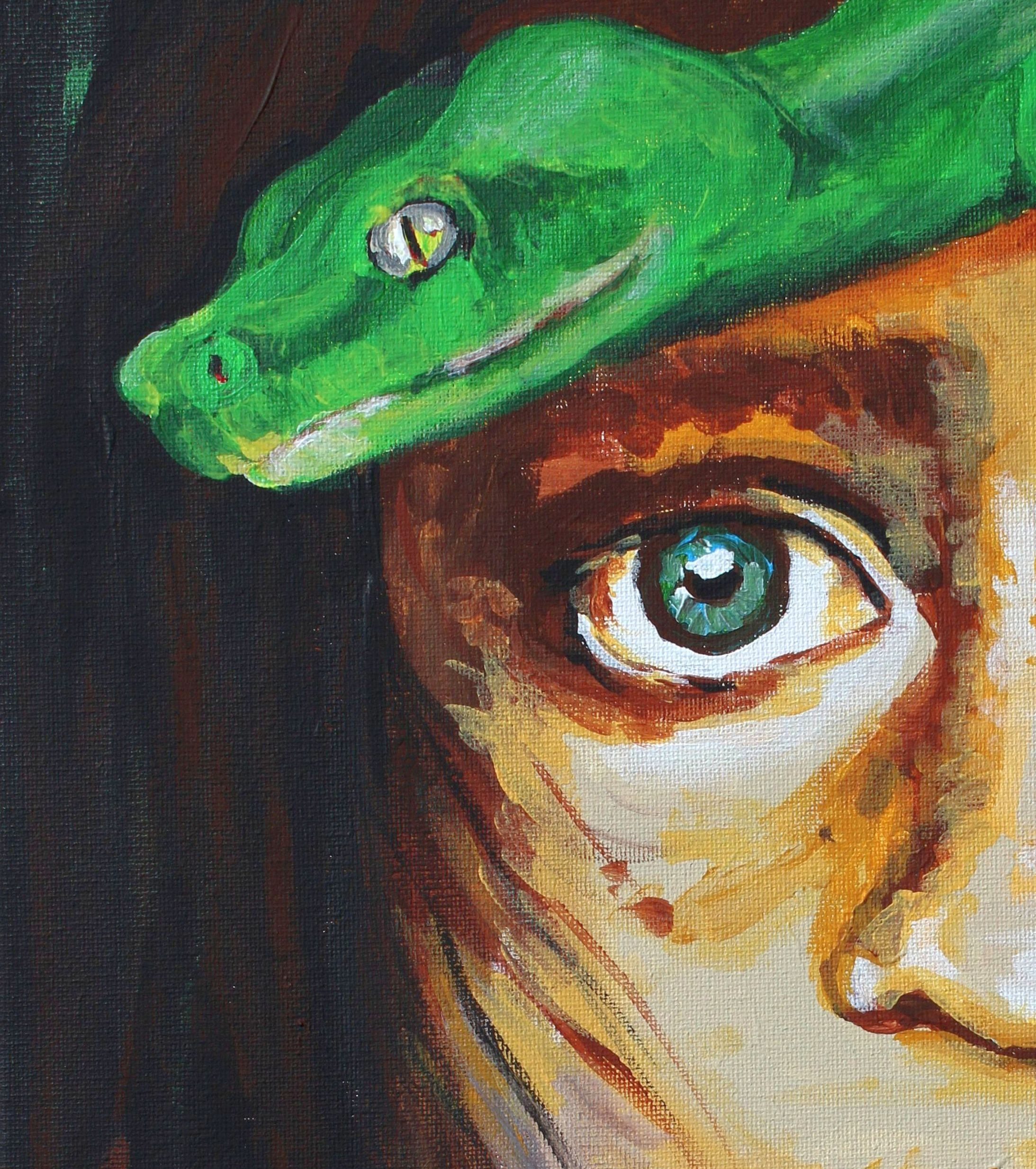
Image is AI-generated, Public Domain.
 Heart of Flesh Literary Journal