POETRY
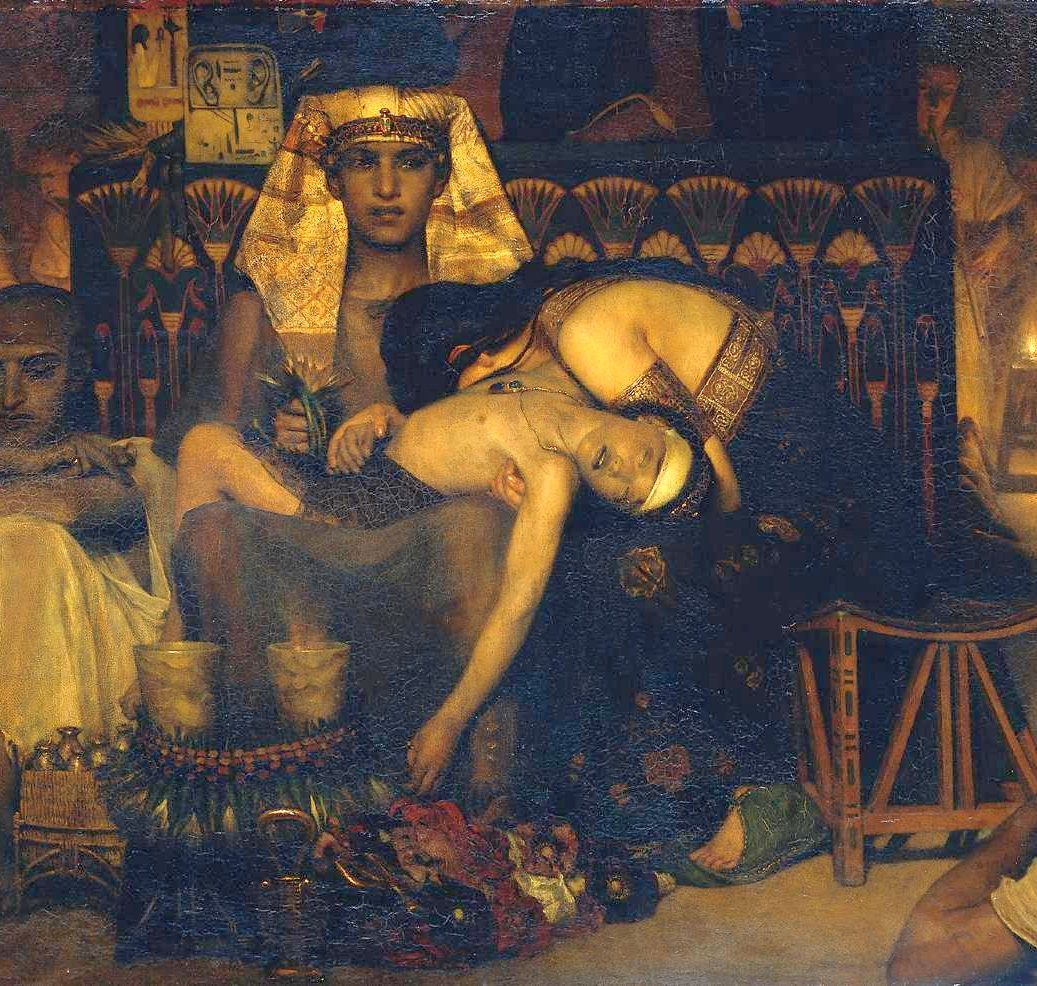
Pharaoh’s Heart
The grief in his eyes — I often wonder
what it looked like. If there had been left
on his image-bearing conscience
a fragment yet undefiled to mourn with.

What heart could withstand such a sting?
Laying your heir in a grave,
knowing no bloodless river’s mercy.
Faulting the lamb, the lamb, the lamb.

I wonder if it did not go from stone
to stone, hellfire to hellfire, but if
the flesh of it gave way to flame,
increasingly, to ice, until entirely corroded.

I often picture him — stripped of all gold,
luxuries bearing no weight. As the dead
devote themselves to the grave, so he clung
to his pain, and his wrath so red, and as deep as the sea.
Three Men
Were killed yesterday, shot dead in the street while I slept.
I remember the furnace, the angels,
their backs turned on a damned world, untouchable
as the flames sought to consume them.
I remember their wisdom, learning
a star’s language, gifts a premonition, a fulfillment, a hailing.
I remember them high
and lifted up, arms strung from horizon
to horizon, pinned with nails to crude shafts of wood,
last words engraved in dirt, engraved in time.

At the site, miles from my home,
people gather in the fog of morning
to demand an end to the unspeakable.
I weep with them in love
and terror. I remember sparrows.
I remember providence and heaven.
In the air I smell the fire, the myrrh, the cross,
before the steel of the bullets
that shot three men dead
yesterday, in the street while I slept.
Natasha Bredle is a writer from Cincinnati. She has received accolades from the Scholastic Art and Writing Awards as well as the Adroit Prizes, and is a Best of the Net and Pushcart Prize nominee. In addition to writing original works, she has a passion for design and curation and currently serves as the Editor in Chief of As Surely As the Sun literary. A student of Williams College, she is a prospective biology and classics double major.
Next (Peter Venable) >
< Previous (Matthew Pullar)
Image: Death of the Pharaoh Firstborn son by Sir Lawrence Alma-Tadema, 1872. Public Domain.
 Heart of Flesh Literary Journal