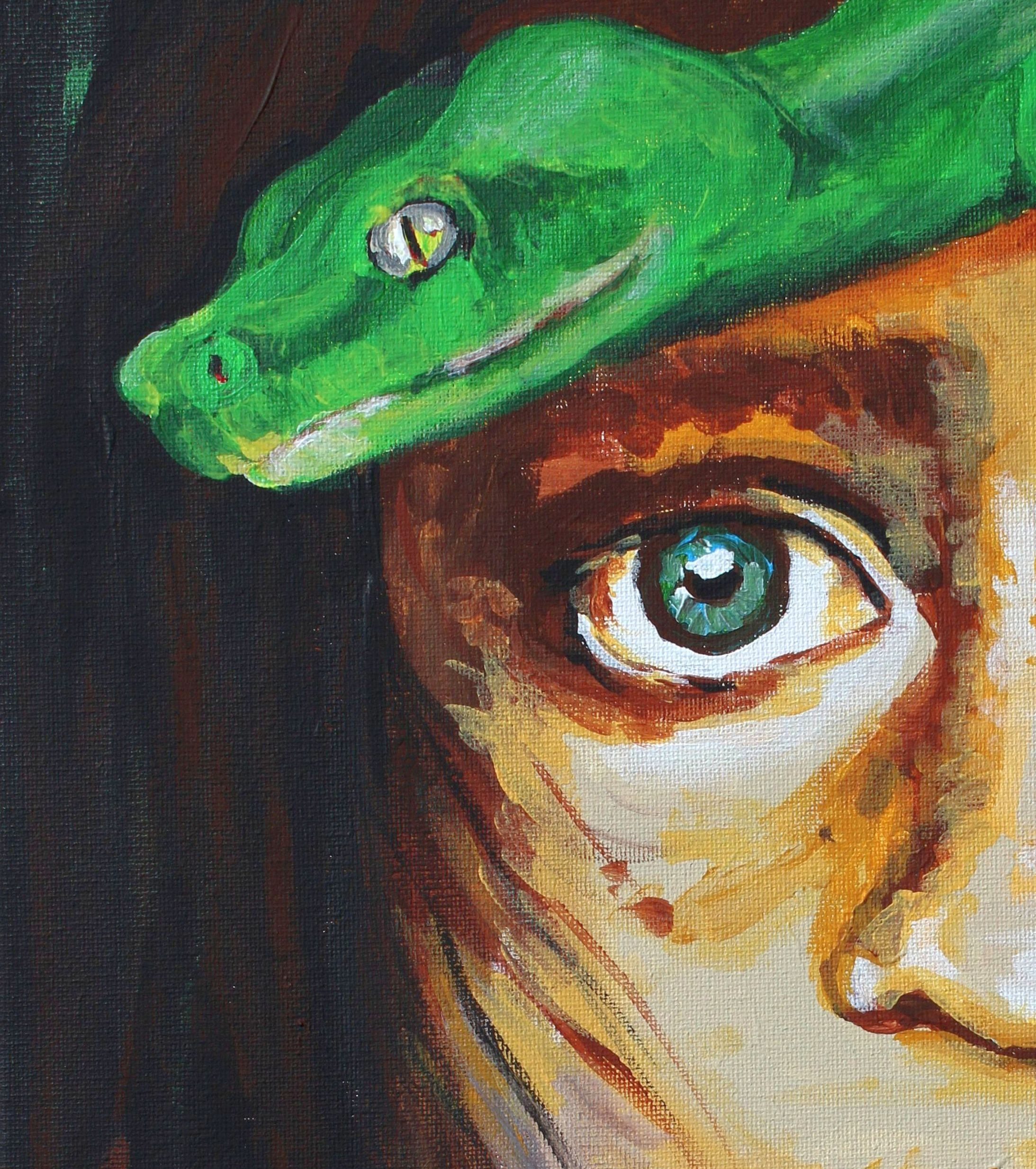
The first prayer that I learned as a child was recited to me by my mother after she tucked me into bed. Eventually, at about four years old, I recited the prayer with her as we both knelt near the edge of my bed. The prayer was simple:
Now, I lay me down to sleep.
I pray to the Lord my soul to keep.
If I should die before I wake,
I pray to God my soul to take.
Amen.
I uttered the words in reverence then, without an understanding of death. Moreover, but for those words, the idea that I could possibly die before I woke up was not only remote but also absent from my four-year-old thought process. My whole world revolved around expectations of playing the next day at the neighborhood playground in good weather or playing dress up at home in bad weather. I remember my preschool distinct likes, which included eating a bowl of sugary cereal in the morning and hoping for spaghetti and meatballs at night. My specific dislikes were vegetables and rainy days.
At six years old, my mother enrolled me in the first grade at a Catholic school. The first-grade curriculum included daily religious instruction along with reading, writing and arithmetic. In religion class, there were lessons about the Holy Trinity existing as God the Father, the Son and the Holy Ghost. We were taught about original sin and venial sin. And I learned that we all have a soul inside of us. The lessons highlighted that after we die our souls will either rise to Heaven or descend to Hell. The soul’s final destination was dependent on what sins we committed here on earth. These lessons made the idea of death a more familiar and impactful concept in my life.
In second grade, our class received a mimeograph sheet of paper that contained a printout of the 23rd Psalm. Our parents were instructed to help us learn to recite this Psalm at night. At bedtime, my mother would take my hand and lead me to my bed. She would then get on her knees and put her hands together with fingers pointed up. I followed her lead. She then began the prayer:
The Lord is my shepherd.
(KJV)
I shall not want
He maketh me to lie down in green pastures
He leadeth me besides still waters
Yea, though I walk through the valley of the shadow of death, I will fear no evil,
for thou art with me….
I would repeat the prayer after her. She would kiss me goodnight before I climbed into bed. Next, she would turn off the light in my bedroom and close the door. As I tried to close my eyes, I tossed and turned in bed because I was stuck on thoughts about this new idea: “the Valley of the Shadow of Death.” The construct of death in my life developed from my first prayer, which stated the possibility of dying in my sleep, to this prayer which informed me that there was a “shadow of death” around me.
Yes, the darkness of night was visible from my bed as I looked out my bedroom window. But now, fear crept into my room with the darkness and stillness of the night. I tried to fight sleep in fear that death would take me away from my mother. Although I was tired, how could sleep come easy as I pondered, “Why did my teacher want me to say that I ‘walk through the valley of the shadow of death?’” As my eyelids became heavy, so did my thoughts. Imaginary monsters who might kill me as I slept creeped into my head space. Why do we have to walk in such a valley? When will I have to walk through this valley? Why do we have to say this prayer at night? If I died before I woke up, would I go to Heaven? So impactful were these thoughts that I once woke up screaming and crying because I had a nightmare about a night creature in the valley of the shadow of death that could make me disappear! My mother ran into my room and turned on the light. As she wrapped her soft arms around my little shaking body, I tried to explain in between my sobs that I had a bad dream about monsters. I never explained that those monsters were in that terrifying valley. In fact, I never approached my mother, or a teacher or any other person with the questions I wanted answered about this spooky valley. Questioning was made more difficult living in a world where children were seen and not heard. So, I remained tight-lipped and mentally confused.
The “Valley of the Shadow of Death” became real to me when my Aunt Ethel died. Before her death, she cared for me on weekends when my mother worked. I remember fun-filled days when I stayed with her. Although Aunt Ethel never had her own children, she adored me as if I were her child. People even remarked that we looked alike and called me “Little Ethel.” So one day, when my mother told me as we walked to the park that Aunt Ethel had passed away earlier in the day, I stopped in my tracks. Mom then asked whether I understood that “passed away” meant “died.” As I nodded yes to her question, tears filled my eyes. My goldfish had died some weeks earlier. The loud laughing boys in my class would stomp their feet on earthworms that wiggled on the ground after it rained and boast that they had
killed them as they picked them up with their fingers to chase the girl in my class.
As I sobbed into my mother’s skirt, she gently stroked my head. I blurted out, “Why did Aunt Ethel walk in that scary valley? Why, huh?”
My mother stooped down so that our faces met. “What valley are you talking about?” she asked.
“You know!” I answered. “The death valley in the nighttime prayer.”
My mother answered simply, “Ethel didn’t go to that valley. She went straight to Heaven.”
I looked upward at the bright sunny blue sky and immediately latched onto that thought: Aunt Ethel must be in Heaven where there is light. In that moment, I remembered the nuns had taught us a song that heralded Jesus as the light of the world. I immediately leaned into their teaching that good people go to Heaven. My crying stopped because I was assured that my aunt went straight to Heaven. There was no Valley of the Shadow of Death for her.
As I grew and matured, other family members died. Notable public figures died. There was a difference in my response to the news of those deaths as compared to my reaction to the death of Aunt Ethel. Generally I might feel sad upon learning of the initial loss of life. And I assumed that in most cases those who had departed this life had souls that went straight to Heaven.
Eventually, I understood Psalm 23. The shepherd guiding the flock became more prominent whether I recited with others or silently read it or listened to someone reading that Psalm. The conceit of the Psalm is that the Lord is my shepherd and is with me always. Even in my darkest moments of this human experience on Earth, I am no longer stuck in the valley because I go to the next verse:
I will fear no evil;
(BSB)
For You are with me.
However, even with my understanding that the Lord is with me in times of life’s uncertainties, Psalm 23 seems to fly in the face of most of the other passages of the Old Testament and the New Testament. Those passages literally shed light to a world so often full of dark despair—John 8:12 sets forth that Jesus is the light of the world. It is further written that God’s Word is a lamp unto my feet and a light for my path. I am guaranteed that the light of God is with me always. I now know that not even death can produce a shadow large enough to block the light of God.
As a result, I now go to sleep with thoughts about Jesus as the light of the world when I turn off my lamp and welcome the stillness of the night. I comfort myself with a Psalm written by David after the 23rd Psalm. I recite these verses of the 27th Psalm and offer it as my simple night prayer:
The Lord is my light and My Salvation
Psalm 27:1 (GOD’S WORD® Translation)
Who is there to fear?
The Lord is my Life’s Fortress.
Who is there to be afraid of?
My worries of the day are set aside as I relax my body in bed to slumber. White pulling my comforter over my shoulders, I wrap the darkness around me. I let out a deep breath from my belly related to all uncertainties in this life. I then inhale the certainty that Heaven is my soul’s destiny if I follow the light of God here on Earth. Finally, I shut my eyes, unafraid of the night.
Pia Wood is a retired attorney. Pia holds a J.D. degree from N.Y.U. Law School, and B.A. and M.A. degrees in English Literature from C.C.N.Y. She is the proud mom of two daughters and proud grandmother of two granddaughters.
 Heart of Flesh Literary Journal
Recently I read the piece by Pia Wood, Light Casts Out Fear, and it truly touched my heart on many levels. I, too, went to a Christian School, Protestant not Catholic, but our days were spent in worship and instruction of the Bible promoting a better understanding of what it meant to live in Christ. I had gone to such a school as a child and wanted that for my children, as well. But it was Pia’s recollection of her childhood night-time prayer, “Now I lay me down to sleep,” that peaked my interest. That prayer had been mine, as well, but unlike Pia, I didn’t question its words as she did, but recited those words for many years. I wonder why the phrase, “if I should die before I wake” didn’t bother me, but it didn’t and if it did, I don’t remember discussing it with my Mother or anyone else, in fact, it’s the very prayer I taught my children. But, I do recall that that phrase did bother me then so that we stylized the prayer to eliminate the reference to dying in my sleep and fit a borrowed phrase from another children’s prayer so that our night-time prayer went like this,
Now I lay me down to sleep
I pray the Lord my soul to keep
Take my hand and ever keep me
Close to thee, AMEN.
By doing that I thought I’d eliminate the thought of death to spare them because that’s what we parents do, what we can to spare our little ones anything unpleasant.
As my little ones became older I encouraged them to develop the skill of creating a prayer that was theirs and theirs alone, one they made up that contained things and people they were thinking about and wanted to tell Jesus about.
But that’s not all that I wanted to speak to. Having memorized the 23rd Psalm, Pia was scared, once again, by the idea of the valley of the shadow of death, but fortunately she was comforted by the nuns by the concept of Jesus as the Light of the World. At last, she had the Light she needed in the dark shadow of death. Pia’s reference to the soul’s journey, that is, what gave her comfort, she stated as, “We were taught about original sin and venial sin. The soul’s final destination was dependent on what sins we committed here on earth, as well as leaning into the nuns teaching that good people go to Heaven.”
I guess that this bothered me regarding death and going to Heaven and here is where I am so sad that this little child, Pia, though comforted by learning that Jesus is the Light of the Word who dispels the darkness in the world, the shadow of death, which of course He is, must then deal with believing she must be “good enough” here on Earth so that she is able to earn a spot in heaven because “good people go to heaven.”
God knows we can never be good enough to earn Heaven so He sent His perfect Son, Jesus, to die in our place and thus He take away our sins. All God asks is that we believe that Jesus died on Calvary’s cross and rose again on Easter and Heaven is ours to live with Him forever. Because His love for us is so great, He was willing to sacrifice His own Son for our salvation. Our gratitude and love for sending His Son is shown by loving others as I love myself and spreading the gospel to those who do not know of Him.
I’m so glad that Pia is no longer scared by the valley of the shadow of death and realizes that Jesus is the Light of the World who lights her path and dispels the shadows, but what Pia found as comforting from the nuns, that is, earning Heaven is dependent of what sins we commit on earth, would be anything but comforting for me. I know that God loved me so much that He sent His Son, my Savior, Jesus, the Light of the World to Earth to pay the price for my sins on Calvary’s Cross and as a result, Heaven is mine.
LikeLike
Thank you for sharing this perspective with us. This is so beautifully written. My favorite line in your story is “I now know that not even death can produce a shadow large enough to block the light of God.”
May God Bless You!
LikeLiked by 1 person
This was such a lovely, warm, thoughtful and comforting piece. Thank you for your insight!
LikeLike
Ms. Wood:
I am a senior black woman who has been terrified of death my entire life. My father, a Baptist preacher, tried to help by telling me to recite the 23rd Psalm. That did NOT help. However, eventually I arrived exactly where you did. Thank you on behalf of all those who needed to hear this encouraging message. God bless. (BTW, I was an English major, too. But my Catholic University didn’t help, either.)
LikeLike
Beautifully expressed! Many of us learned Psalm 23 as children and really didn’t comprehend its full message. Ms. Wood shows it in the lens of understanding. Her explanation of it as a mature person is very valuable.
LikeLike