My journey back to God started after an evening of drinking. Winter was refusing to take its bow that early March, and the winds blew bitter when my friend and I piled into his car to return to the simple farmhouse we rented that year. A new law passed earlier that year required all passengers to wear their seat belts — something I refused to do in protest. That night, as I bundled into the front seat, I chose to follow a strong internal impulse to put the belt on, and doing so almost certainly saved my life.
Our journey home took us along lonely country roads, and it was on one of those that the car hit a patch of ice. My friend tried to regain control of the car, but it swerved violently, back and forth across the road before flipping and then rolling a few times before wrapping itself around a hydro pole in the ditch. If you have been in an accident, you will know the sensation of feeling that you are witnessing it all happen in slow motion; time seems to stretch out, and you are incapable of stopping what happens. It took a while for me to realise my current predicament. The car had landed on its side, with my companion hanging in his seat above me. I was at ground level with my feet, lying in an icy puddle, after having pushed through the broken front windshield. I called out to my friend, but he didn’t answer. I tried to move, but was held in place by the seatbelt. The darkness felt complete. The silence was oppressive. I called out to the god whose existence I had denied, saying, “If you exist, I don’t want to die.” That was my first step towards Him.
I was told it took about 40 minutes for a fire truck to appear. As the firefighter cut through the tangled metal to extract us, he told me someone had called the emergency number to say two dead guys were in a car at the side of the road.
That experience, as traumatic as it was, didn’t turn me around. I suffered a few minor injuries, far from being as serious as my friend’s broken neck.
I found work with a landscaping company. That job helped me build my strength up after the accident but ended mid-summer, leaving me a month to kill before starting a new job as a teacher’s aide. For the few years previous, I had traveled back and forth to Europe, acknowledging my need to escape the boredom of living in rural Ontario. I was unsettled in myself. Each trip to Europe over the course of 4 years left me feeling less satisfied, and I decided I needed to look for whatever it was I was lacking somewhere else. A friend I met while hitch-hiking around Europe invited me to California to visit him, so I decided to take him up on it and went there. Plans fell through after I got to Los Angeles, so I decided to hitchhike to San Francisco and visit some of the places I had read about in Tom Wolfe’s The Electric Kool-Aid Acid Test. It may have been a different decade, but the music scene of the ’60s and early ’70s still held interest for me. It was in San Francisco that I took an important second step back towards God.
My ride dropped me off in the city’s downtown, near the bus station, and I felt lost. I wandered around a bit, but as the afternoon wore on, I still hadn’t found somewhere to stay, and felt unsafe in that big, bustling US city. As I had my tent and sleeping bag, I asked around about possible campsites near the city and was told of one at the end of a city bus line. After hopping on the bus and paying my fare, I asked the driver to let me know when to get off near the campsite. He told me he didn’t know of any camping areas on that line. A short man who followed me onto the bus sat near me as I tried to figure out my next step. He started a conversation by saying he overheard I was looking for a place to set up a tent for the night, and said I could sleep on the floor of his apartment if I wanted. He told me he was a priest, teaching at a local seminary, and would offer me a place to sleep, a shower, and a cooked breakfast if I would join two other young people he knew on a panel to discuss the “counter-culture” in America. I took a closer look at him and felt that if he was planning anything nefarious I would be able to handle him in a tussle, and agreed to his plan.
The next morning, I found myself with two other young people seated before a group of nuns, priests, and other religious folk, answering their questions about our lives, drugs, music, and what we considered priorities for our lives. There were two questions posed to me that rocked me- not so much what was asked, but how I answered them.
The first was: “Do you believe in God?” I scoffed at it and replied that I didn’t believe in God and didn’t care if there was one. Even as I answered, my mind went back to the moment I was in the car and called out to whomever or whatever was out there, saying I didn’t want to die. It shook me to remember that moment and my prayer. The second question touched on my family and specifically what my parents thought about my life and my life choices. The moment I said the words, “I don’t care what my parents think,” I recognised I was pretending to be someone I wasn’t. I had no reason to make people think my parents were people whose opinion didn’t matter to me. Despite all my directionless wandering, despite the loud angry music I played in the house, despite my sullenness and bad attitude towards them, and despite my substance use and my smoking, they never rejected me, and were always there to support me (as evidenced by them taking both me and my recovering friend into their home to care for us after the accident).
So, frustrated and disappointed with the hypocrisy I saw in myself, I returned to Canada. A week or so after, I was in my parents’ house one Sunday. They went to church as they usually did, but brought a visiting preacher back with them. I offered to wash the dishes after lunch, and he said he would dry them. In the time we worked side by side, he brought up the topic of God. I repeated I didn’t believe in a god, and he asked if I had ever given God a chance to prove himself to me. Not wanting to get into a discussion, I acknowledged that maybe I hadn’t. He challenged me to get a Bible and start reading in the Gospel of John. He said that Jesus came to help us understand who God is, so as I looked at Jesus and his life and teaching, it might help me. I sloughed him off and said something like, “Sure, I can do that”, but with no intention of actually following through.
I started my new job as a teacher’s aide and support person for three youths in a school for deaf/blind children. It was a discouraging place for me to be at that time of my life. I was living by myself in a new city. I had no friends. I was drinking or smoking pot by myself most evenings. My job consisted of caring for three young men whose lives were severely limited by their inability to communicate. Two of them displayed some violent and self-abusive behaviour. What would their future be? As the bleak Autumn turned into a cold winter. I knew I didn’t want to be wiping bottoms for the rest of my life, but I also knew my options weren’t good as I never finished high school, preferring to party instead of study during my final year. At some point before Christmas, I decided to take up the challenge the visiting preacher gave me, and I screwed up the courage to go into a Christian bookstore and purchase a Bible.
I started reading it, but found myself mocking what I read. My attitude was not open after so many years of finding ways of being critical of the faith of my parents and their attempts at passing it on to me. But I wasn’t happy. One of my co-workers was from the east coast of Canada, a bright, bubbly, young woman full of laughs and positivity. I tended to stay away from her, but it turns out she was a Christian. We didn’t talk about her faith, but I watched her and the way she dealt with the ups and downs of our job. She invited me to a Christmas Cantata at her church, and I went, more because I found her spirit attractive, and I was lonely, than because I was interested in church. It wasn’t as bad as I thought it was going to be.
As the winter turned into Spring, I remember taking the Bible with me to a nearby river and sitting in the crook of a tree to read. My attitude to the Bible and God hadn’t improved, but I was sad in myself and facing what seemed like an inescapable future of more of the same. I caught myself being cynical as I read and stopped. I prayed, “God, if you are there, I want to give you a chance.” That prayer changed something in me, and the words of that Bible became real and were directed to me. A week or so later I was in my apartment and crying to God. I told him I was finished fighting against him. I said I wanted him to take control of my life because I had made a mess of it. I was immediately filled with a wave of peace. It was a peace that seemed to erase all the anxiety and uncertainty that had previously filled me as I contemplated my present and future. I had given my life to God, and He was in charge now.
He led me to return to school as a mature student, to join a Christian group on campus, and to meet a young woman studying there who would become my wife and partner. We have served God, carrying His hope and peace into Canadian prisons and on the mission field in Ecuador. I still marvel at the patience God had with me as he worked through circumstances and people to reveal his love to me. He has given my life purpose, and I am eternally thankful that he rescued me.
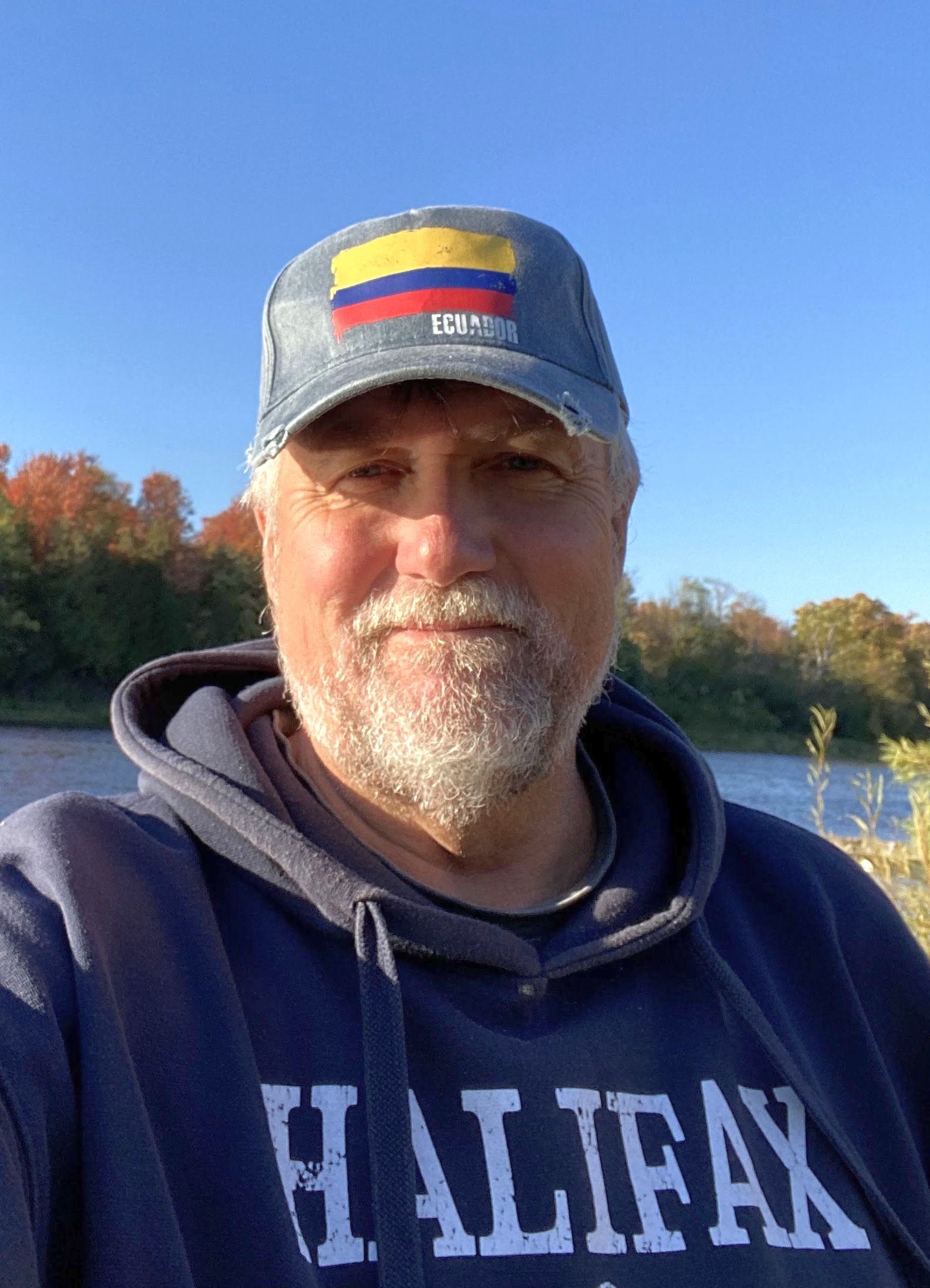
Timothy Horne is a recently retired missionary/social services support worker living on the beautiful east coast of Canada in Dartmouth, Nova Scotia. He dedicates his time to writing (https://substack.com/@timorlili) and supporting the work of his church. Singing in the choir, enjoying downtime with Lil and any of their children who may be around, as well as exercising and reading, bring him joy.
 Heart of Flesh Literary Journal
Very much the same story as my testimony, just different words. Thank you for sharing.
LikeLike
Amazing testimony. Thanks for sharing, Timothy.
LikeLike