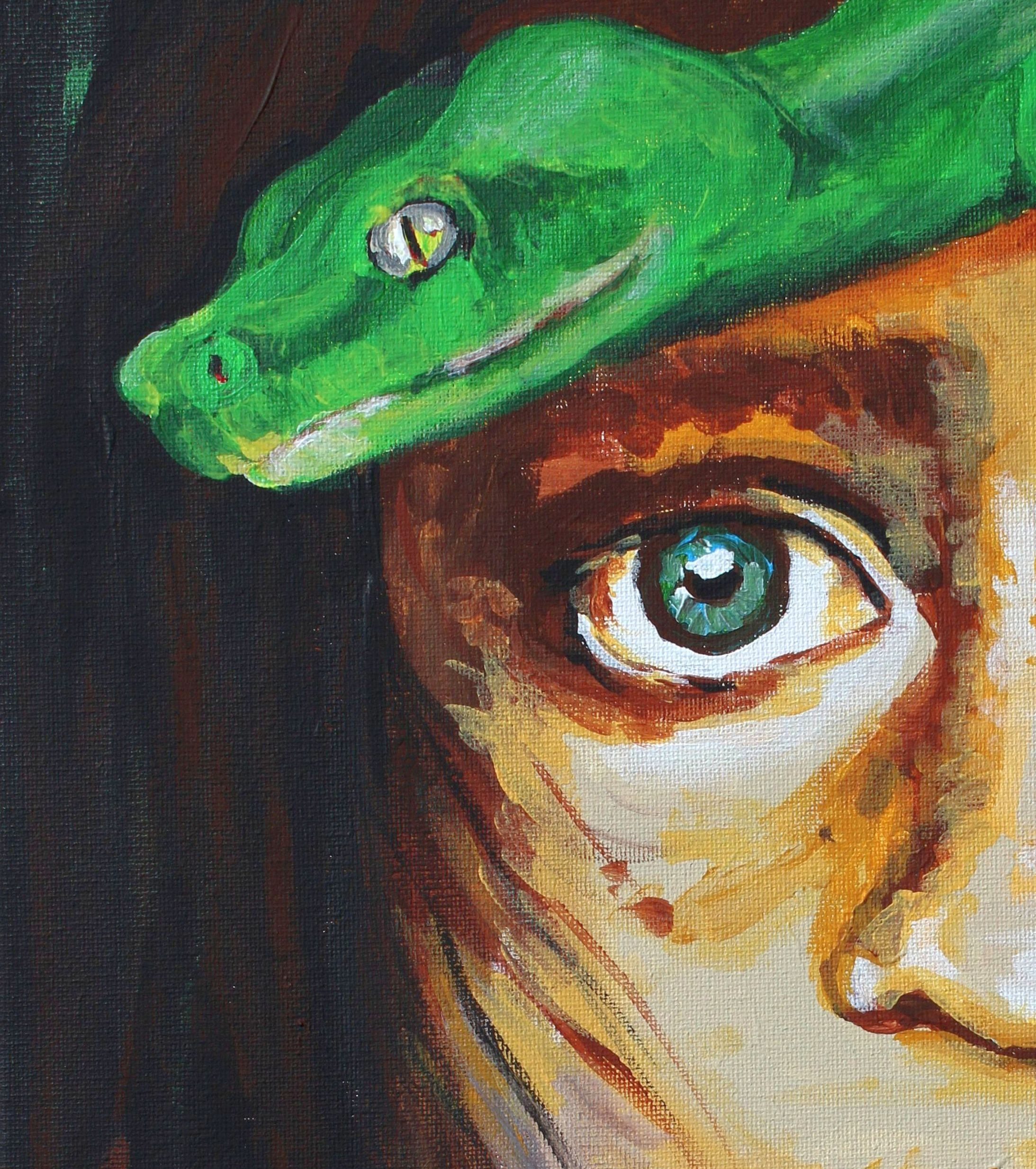
Jesus was thirty years old when he plunged. He sought out his cousin, John, a desert dweller who ate locusts and honey and preached to a good-sized crowd to repent of their sins before he dunked the converts underwater. An Armenian icon depicts Jesus’ baptism like this –– Wearing nothing but a loincloth he stands waist deep in an oversized jar of water meant to be the Jordan River. Fish nip at his feet looking like swim fins at first glance. The halo over his head is crowded with the hand of John the Baptist, the arms of his future cross, and a dove descending directly below a few fingers that point barely noticed from the top of the frame, as if God is directing the bird to the right man. John, who is standing on dry land, rests his palm on Jesus’ forehead as if checking for a fever. Two angels stand behind John, their enrobed arms extend toward Jesus as if ready to dry off the wet and shivering Beloved by embrace.1
***
I was twenty-four when I was baptized. On a Sunday morning in 1985 in the middle of a worship service I stood in front of a United Methodist congregation of sixty or so people. They gathered each Sunday in the stucco structure to sing and pray and listen to the pastor. After worship we made small talk once I was brave enough to walk into the social hall instead of the parking lot. I barely knew them, but I knew enough to covet what the churchgoers seemed to possess – belief in and relationship with God.
So, with the limited understanding of someone raised outside the church, I said “I do,” when asked if I “truly and earnestly repented of my sin.” Following the ritual of Baptism in the United Methodist Hymnal, I confessed Jesus Christ as my Savior, speaking vows carried down from earliest Christendom. My pastor dipped his hand into a small bowl of water, touched it to my forehead not once, or twice, but three times. In the name of the Father – and of the Son – and of the Holy Spirit. He baptized not me, but my bangs – my short blunt bangs that hung like starched café curtains across my forehead. They were barely damp, recipients of a few scant drops of water I couldn’t feel. Water never touched my skin.
***
What compelled Jesus to show up at the river? We assume he knew his true identity – Son of Man. Submitting to John’s baptism was the ceremonial swearing in after God’s election. He queued up with sinners, nothing signifying he wasn’t like them. Whatever private message God communicated to Jesus when he sat by firelight sharpening his carpentry tools was confirmed in the light of day along the banks of the Jordan. The wet and repentant of the day took their vows, sharing the desire to turn their lives around. They understood with thunderclaps and a dove descending that they were in the presence of greatness. The Beloved.
***
I had no idea what it was like to be beloved. As far back as I could remember I felt hollow deep within. Even before I was nine and my parents divorced and stepparents and their families began to revolve in and out of my life, a chamber of my heart felt vacant. For years I tried to fill the void with academic awards, job promotions, recognition in political campaigns and volunteer work. I had a series of steady boyfriends who wanted to marry me, and at twenty-one I chose a husband. But try as I might, there was nothing I could do or say, make or take that could fill that secret ache.
***
God came into my life when I was lonely, twenty-three, married a little more than a year, living in a new town where the only person I knew was my husband. It was 1984 and the Orwellian threat was not Big Brother but nuclear war, and mushroom clouds filled my dreams with apocalypses and radiation despair.
God came to me when I was naked. It was a Monday morning, my day off. My husband had already left for work. God arrived not in a River Jordan, but courtesy of the municipal water supply. I was in the shower, soapy water swirling around my ankles. I rinsed shampoo out of my hair and the drain, as usual, was slow. The water pressure was high, pelting nicely against my scalp. I felt the last of the suds drip past my eyes and with it the water changed. It flowed softer filling me from inside out with love, pure love. This love wasn’t the zingy romantic pulsing I’d felt when I’d fallen in love. It didn’t feel like attraction, it felt elemental, the absolute and unconditional love I would later feel for my daughters when I birthed and held them. This love was expansive, excessive, a gift I hadn’t realized I’d asked for.
For reasons I will never know, I had no doubt this love came from God and later, when I came to know Bible stories, seemed entirely plausible. If Jesus could turn barrels of water into wine at a wedding reception to please his earthly mother, then his unearthly father could change water to love in my bathroom pipes. My empty center filled and flooded with the conviction that God loved and would never leave me. Tears joined the shower water and trickled into my mouth tasting lightly of salt and chlorine. Sometime later I turned off the faucet, watched the last of the water swirl down the drain, opened the shower curtain and reached for a towel. I felt like a different person, raw and alive, claimed. I was marked. But when I wiped the fog from the medicine cabinet mirror and stared at my face I looked the same.
I didn’t let on at dinner that night and nobody at work asked what had happened to me. From the outside I appeared to be my normal self. That soothed me. In my world a person conducted research, made pro and con lists, and chose rationally – from appliance purchases to deciding when to get married. Life was concrete and when I encountered things that couldn’t be explained, I dismissed them and the people they involved as flaky or crazy. I didn’t want people to think I was nuts.
I had been to church as a child, a visitor at best, an interloper at worst. Church, when I had visited with my Baptist grandparents and Catholic neighbor, had been both confusing and boring with coded language and actions I hadn’t understood. No one there acted like they felt what I felt under the faucet. I couldn’t talk about what happened to me. I didn’t have the temperament. I didn’t have the vocabulary. I didn’t have an explanation, or a simile like United Methodist worship specialist Daniel Benedict’s, “We live wet – like fish in new water world.” It would be fifteen years before I had the courage and self-confidence to tell my shower story to another person.
Frightened as I was of the implications, I couldn’t ignore or deny my shower experience. God loved me. I felt it. I had to respond, to do something in return. I recalled vaguely that Jesus said something about giving up everything and joining him. Was I supposed to leave my husband and join a convent? Was I supposed to sell my car, give my clothes to Goodwill, and move to an Israeli kibbutz? Being a child of divorce, who’d vowed never to divorce, those choices seemed beyond my abilities.
I had been volunteering for an anti-war movement called Beyond War. The pastor from the local United Methodist Church attended one of the presentations and said his Bishops had written a letter in response to the nuclear threat titled In Defense of Creation. Slightly amazed that such a thing existed in a church, I attended their peace study. I took a membership class after the peace study and was impressed by the founding principles of the denomination that considered not simply scripture, but tradition, experience, and reason. I was encouraged to think for myself, something I’d always assumed becoming a Christian would negate. At one membership session the pastor handed out a pamphlet of social principles that focused on everything from eradicating poverty and disease to fair wages and union rights, racial equality, and respect for the environment. This care for others was contrary to the cries of “Save yourself” – and by implication let everyone else fry – that made me cringe when I’d heard it from Bible thumpers on campus during my college years. These principles mirrored the values I held as a liberal activist. Feeling that alignment, I was prepared to pledge my prayers, presence, gifts and service to the Gilroy congregation and the denomination.
The only obstacle to my membership was the matter of baptism, specifically that I hadn’t been baptized. I couldn’t join the church without baptism. Turns out, it was an easy – too easy I think in retrospect – problem to solve. I didn’t need another class. I didn’t need to study biblical accounts and precedents or have an understanding of historical or theological reasons for baptism. All I needed were a few more questions from the United Methodist Hymnal inserted before my membership vows, and voila, I’d be in. My pastor didn’t even tell me how my baptism would be done. If he had, I might have reached up and pushed my bangs to one side, leaving him a large expanse of forehead to douse.
***
I think about the people who flooded to the Jordan River, eager for sin cleansing and a fresh start. They kicked off their sandals and waded in, gasping a bit when the water slapped against their hips and stomachs. Then they held their breath and John the baptizer dunked them under. There was the sensation of surrender as they submerged. They closed their eyes against the shock of cool water enveloping them. They experienced the smallest sensation of drowning before they surfaced gasping. John warned them that there was more to it, that this was just the beginning. Someone else was coming who was going to baptize with fire. No doubt that branding would sear us into family, scar us for life, leaving marks no one could ignore or forget. Whether the people listened, whether they followed Jesus into the fire or not, there could be no arguing that their baptisms were memorable.
***
My baptism was memorable for the wrong reasons. It was a bust. I was no stranger to water, growing up along the beach in Southern California. I took frequent trips to the coastal tide pools watching hermit crabs scuttle underwater in craggy recesses. The summer I turned five my mother enrolled me in Red Cross swimming lessons. I spent two months each summer for the next eight years immersed in the public swimming pool learning floats, strokes, dives, and rescue techniques that I practiced in the ocean where I taught myself to bodysurf. At night, in the bathtub, I held my breath and submerged looking up through a lens of wavering water.
***
If a water baby like me craved a dramatic baptism with more than few drops of water, how could John or Jesus baptize the disciples, those fishermen who waded in water day in and day out? Surely, they’d caught their feet in nets of floundering fish, had been pinned under water and nearly drowned. Did they require a lengthy immersion? Did the baptizer hold them underwater until the last of their breath escaped their lungs in futile bubbles as they surrendered to death? Or given the aridity of the region, did they approach an arroyo only to find a puddle rather than a stream? Did they submit to a dry baptism, the mud and muck of riverbank ground into their skin? What would feel most like giving up an old life and becoming a new creature?
***
I suspected my baptism was a fake. I had done my part with my baptismal vows, but I was convinced my pastor had failed in carrying out God’s part. I couldn’t ask for a do-over – that would embarrass my pastor, and his embarrassment would embarrass me. Plus, I would later learn that Methodists believe a single baptism is sufficient and will honor the baptisms of other denominations as well. I smiled when people hugged me after the service, but deep down I worried that since the water hadn’t touched my skin, I hadn’t really been baptized.
At home after my vows, writing in my journal, I tried to think about what I was supposed to have denounced in my baptismal vows. I’d experimented with sex before marriage and alcohol before I turned twenty-one, and wasn’t sure if those acts were born out of sin or were simply the neediness of a poorly parented child. I’m not sure, even now, if there is a difference between the two. I was unclear about sin, but I did know about Hell. I was frightened to death of it. I’d read The Exorcist when I was ten and thought that if anyone was vulnerable to being possessed by the devil, it was me defenseless and home alone overnight way too often without parental protection. Baptism, with its sprinkle of water, was insurance against Hell. It was supposed to keep the devil away while I was alive, and after death become my ticket to heaven. Without it, I was in danger of being burnt to a crackly crisp.
The words in the United Methodist Hymnal read aloud at my baptism were pretty clear, “Forasmuch as all have sinned and fallen short of the glory of God, our Savior Christ said, ‘Unless one is born of water and the Spirit, one cannot enter the kingdom of heaven.’”2 If I hadn’t lived a childhood of fear always anxious since the adults who were supposed to take care of me didn’t, if I hadn’t come of age in the cold war and nuclear shadow, if I hadn’t come to church craving official sanctioned acts and saving, then I might have noticed that water wasn’t the only necessary ingredient. Spirit was in the same sentence. The spirit of love had come to me in the shower, but that experience had been private and unofficial, and in my early years as a Christian when I was assembling my faith, that rain of love didn’t fit into my formula.
***
If I wasn’t going to get drenched with Holy Water, I wanted my baptismal trickle to sear my skin as though delivered by electric eel, multiplying the power of my shower experience. I wanted to be zapped, marked. I thought God was supposed to act in my public ceremony of baptism the way he had in my private conversion. I would have settled for one drop on my forehead if I could have felt it as powerfully as I did that morning when the water turned to love. A tiny drop of water on my face – not absorbed by my split ends – that promised me a brand-new future and filled the moment with import. Was it too much to ask?
Maybe if I’d been one of the three thousand baptized on the birthday of the church in Jerusalem, a desert city without river or sea, a solitary drop was all I would expect. I think about Peter, exercising his voice outside the upper room where he’d been hiding out with the disciples after Jesus left for good, wondering, worrying what would happen next. Filled with the Holy Spirit, and not new wine, he spontaneously combusted along with his friends, speaking a language that was universal for the first time since the tower of Babel fell and speech scattered with it.
I imagine the logistics of Pentecost, women rushing back and forth to wells filling their jugs, presenting them to the disciples who cupped their hands, poured water over the converts’ heads, perhaps extravagantly at first – a water-running-through-the-hair-cooling-the-scalp baptism – until the heat rose, the women slowed, the heavy jugs arrived more infrequently. Those waiting in line for the ritual grew restless, the baptism reduced from a pour to a trickle to a drop, and when the water ran out, the disciples, perhaps remembering their master’s use of spit to heal, smearing saliva across the foreheads of those at the end of the line, until the last of the new believers was marked.
***
By the time my oldest daughter was born in 1988, I’d absorbed the idea that baptism was more about the recognition that we belonged to God – and less about applying two molecules of hydrogen and one of oxygen to human skin as insurance against damnation. I wanted my baby welcomed into the arms and family of God from the beginning of her life. I wanted her to know, once she got older and could think about these things, that from the moment she was conceived, she was God’s beloved. When she was six months old, she was baptized in the United Methodist church in the town we’d moved to shortly before her birth.
I made pledges on Jennifer’s behalf. I declared Jesus Christ as my Savior and repented of sin, although at twenty-six, I still wasn’t sure what sin was. I pledged to nurture my daughter in Christ’s holy Church, and I was aware of the congregation’s promise to do the same. The pastor dribbled water over my baby’s head three times. Her bald scalp wasn’t soaked, but there was no doubt she felt something. Her eyes grew wide. She looked straight at Pastor Lorraine, who took Jennifer in her arms, lifted her high overhead, and walked up and down the aisles with her, presenting the newest daughter in Christ to her family.
In that holy moment, I was aware that infant baptism is not only an offer by flawed human beings to raise a child in the family of God, but also an acknowledgment that this young life is as pure and open to limitless possibilities as it ever will be. Water and soul, gratitude and enormity wrapped into a moment filled with unseen and ever-present doves and voices. The beloved was in our midst, in the form of this tiny person.
***
Remember your Baptism and be thankful. I have been part of a church for almost forty years and each time there is a baptism, members of the congregation are asked to remember their own. I used to remember and cringe inwardly. Even though my ceremony had been botched, the longer I lived as a Christian, the less preoccupied with the devil I became. My focus shifted to God and what it meant to live a life of faith rather than fear. When I didn’t want to remember my shoddy baptism, I remembered my daughters’. They are now adults who have no memory of their infant baptisms outside of photos and stories. I don’t regret the decision to have them baptized as babies, but I wonder if I have taken from them the opportunity to remember and be thankful.
***
As much as we try, we can never do God right. Our sacraments and rituals, the big moments in our lives of faith, will always be subject to our bad hair, our faulty timing, and the things our parents did or didn’t choose for us. My baptism wasn’t the spiritual high I expected. It was, however, a day marked by my full humanity. Wanting things to go perfectly illustrated not only by my need for God’s grace, but my need to extend grace – to my pastor, to the congregation, to God. As Gayle Felton writes in her book, This Gift of Water, “Baptism, then, is not so much an event as it is a process … dynamic, not static; a journey, not a destination; a quest, not an acquisition.”
***
The journey of baptism gradually led me to the pulpit. For seven years, as a lay minister, I led my congregation in worship. The second Sunday of each January, we celebrated the Baptism of the Lord. One year, I stood at the altar behind the baptismal bowl and poured a pitcher of water into it, declaring the story of Christian faith with a liturgy from Marcia McFee.3 “This is the water,” I said, beginning when God brooded over the deep, separating water from land. “This is the water,” I said, continuing to the parting of the Red Sea and on through the exodus and Old Testament events. I launched into the gospels with Mary’s water breaking at Jesus’ birth, recounting Jesus’ baptism and Pilate’s washing his hands of the whole King of the Jews mess at Jesus’ death until – on the verge of tears at the implications of Jesus’ life – I declared, “This is the tomb that couldn’t hold him.”
I slapped the water hard, and it leapt from the bowl, soaking the altar cloth, splashing my face, dripping down my cheek, spotting my glasses, and smearing my notes. I looked at the congregation through my watery lenses and told them what I know. “This is the water that reminds us who we are, and whose we are.” Then I sat down, thankful for the water dripping down my face.
- The Baptism of Jesus from the Matenadaran collection of Armenian Miniatures #6201. Evangile of 1038 A.D. ↩︎
- Ritual of the former Methodist and former Evangelical United Brethren churches, United Methodist Hymnal, p.46 ↩︎
- McFee, Marcia, “This is the Water,” ©marciamcfee.com ↩︎
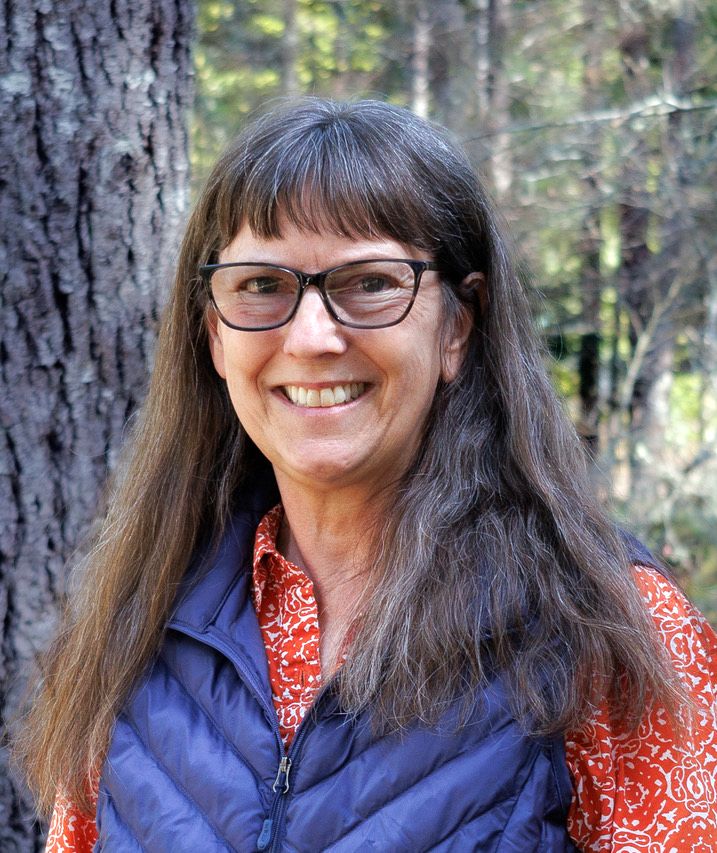
Cathy Warner has written four books of poetry including: Canal Contemplations: Poetry and Photos of Washington’s Hood Canal (2025) and edited three poetry anthologies including Poemographs for Peace. “Watered By The Spirit,” from her MFA (Creative Writing) thesis, appeared in the 2011 graduates’ publication Archipelago. Find her at cathywarner.com.
 Heart of Flesh Literary Journal
What a moving, beautiful essay, Cathy, and how marvelous that it finally found such a good home! I’m with Dan Wakefield (bless him for his early endorsement!)… this made me cry, too.
I will read it again and again, I know, treasuring your insights and lovely lines like: “At night, in the bathtub, I held my breath and submerged looking up through a lens of wavering water.”
Bravo, you!
LikeLike
Thank you for posting this. It is an interesting read. I have known so many people with questions about their baptism.
LikeLike
Thank you reading & commenting, Don.
LikeLiked by 1 person