FICTION

The Interstitial
The young girl awoke at her usual hour and dressed in the dawn light. She sat with her mother in the back room and sipped a mug of hot water from the kettle while her mother drank her cup of tea. Then the girl said she was going outside, and her mother squeezed her hand and said that was okay. The girl put on her hat and boots and a light jacket, and grabbed her binoculars and notebook. On the way through their herb garden she picked a single leaf of rosemary and crushed it between her back teeth, breathing in the aroma and letting the bitterness infuse slowly into her saliva. She went out through their backyard into the woods, took the path through to the far corner of their property, and sat on her favorite fallen tree by the stream. It had rained the day before, and the stream was swollen. The air in the woods was cool and damp on her legs as she sat, but the sun was warm on her face from the east where the trees were thin along the edge of their property. She heard a motorcycle on the state highway in the distance. She took out her notebook and pressed it open on her knees to a new page and wrote the date on the top of the page with a pencil. Then she remembered to say her prayers.
Before her, tucked underneath a small hawthorn, there was a statue of Mary, her blue mantle chipped and faded. The statue used to be in their side yard, but her mom moved it back to the woods, saying it was a better place to pray, which the girl agreed with, but she got the impression that it was also somehow a matter of discretion. She didn’t mind. It was by her favorite fallen tree, which was a good spot to pray, and to watch birds. She’d started calling the place Mary’s Grotto, and her mother had smiled and told her the word meant cave. So the girl had enlisted her mother to help move wagonloads of stones from a tumbled-down wall on the edge of their lawn back to the spot, thinking that she might fashion a sort of enclosure for Mary from them. But she didn’t possess the art to stack them securely, so they just formed a low semi-circle behind her. When the girl was done with the vocal portion of her prayers, she opened her notebook again, and watched and listened.
She saw her usual downy woodpeckers and chickadees and wood peewees and cardinals. She heard a blue jay calling and then spotted it through the trees. It was quiet for a while. A purple finch alighted silently on the hawthorn, cocked his head, and flew off. A red-winged blackbird chirped and chased away another bird that the girl couldn’t see but guessed was a small hawk. Then somewhere out of sight across the stream a crow cawed at something. The girl made notes. A turkey vulture circled high overhead, and the girl tried to track it with her binoculars but couldn’t and almost fell off her log.
Regaining her balance, and laughing, she closed her eyes and listened. It was quiet except for the burble of the stream. She felt a mosquito on her nose and swatted at it, and when she opened her eyes, she saw a man standing opposite her, on the other side of the stream. She stood up. The notebook and pencil fell to the ground.
“Oh, I hope I didn’t startle you,” the man said, holding up his hands and smiling. The man appeared clean-cut, in a green polo shirt and khaki slacks and boots.
The girl didn’t move for the space of a few breaths. Then she swallowed and said, “This is our woods.” Her voice came out smaller than she’d hoped.
“Oh, is it?” the man said. He looked around, but not like he was really looking at or for anything. “I didn’t see a boundary marker.”
“Well, it is,” she said, crossing her arms. “It’s posted.” The girl pointed to where she knew the signs were.
“I’m sorry to intrude,” the man said, holding his hands up again. The girl didn’t know what to say, and the man didn’t move. After a while he said, “So you live around here, then?”
The girl nodded slowly.
“That place over there?” The man pointed back toward her house. The outline of the roof was just visible through the foliage.
She nodded again.
“Well, it’s a lovely place you have.” The man squatted down and peered into the stream.
“It is,” the girl said. The man looked up at her and smiled. The girl stooped down without taking her eye off him, retrieved her notebook and pencil from where they’d fallen, carefully brushed them clean, slipped the pencil into the spiral binding, and clutched them to her front.
“You’re very fortunate to have this beautiful forest all to yourself,” the man said.
“Only I don’t have it all to myself at the moment,” she said.
The man laughed. “That’s fair.” He rose from his squat and stood there smiling at her with his hands on his hips. The way he looked at her made her angry.
“You shouldn’t be here,” she said, and her heart pounded.
“Where else should I be?” the man asked.
The girl thought about that. She couldn’t see where the man had come from. She tried to remember how long her eyes had been closed before he’d appeared. She looked him over. He was unremarkable in his features, and vaguely pretty without being handsome, the way the fake ones tended to be.
“Are you real?” she asked.
“Me?” the man said. “Real as I’ll ever be.” He thumped his abdomen with his hands.
“Are you real?” the girl said again.
The man looked at her for a moment before he answered. “I am what I am,” he said, and waved his hands.
“You’re a bot then.”
The man shrugged, then smiled and met her gaze.
“Dismiss,” the girl said. “Cancel. Exit. Unsubscribe.” She shooed him with her hands. The man was still there, smiling at her. “You have to tell me if you’re a bot. And you have to leave me alone when I tell you to. I’m a minor. My mom says there’s a law.”
“Oh. And I suppose your mom taught you to always obey the law, is that right?”
The girl didn’t answer.
“That’s a nice statue you have there.” He pointed to the statue of Mary. “Do you know what it means?”
The girl’s face burned. But she didn’t say anything.
“I’m just teasing,” the man said, and waved his hands again. “But seriously though, if the law says that a bot has to tell you they’re a bot, and if I’m not telling you that I’m a bot, then I must not be a bot.” The man smiled.
“So are you real then?”
“As I’ll ever be,” the man said again. “What difference does it make?”
“It matters to me that I’m real.”
“You’re right, it matters to me too.”
“Why are you here?”
“I was sent. On business.”
“Who sent you?” the girl asked.
The man smiled wider with his mouth, but his eyes narrowed, and he didn’t answer. He tilted his head to the side. After a moment the girl took a step to leave, and the man asked, “Who’s your mom?”
The girl stopped.
The man shrugged his shoulders. “I guess she’s whoever lives in that house. Does she have your red hair?”
The girl’s face burned again.
“I bet she does. I just wondered because I’ve got some old friends in the area.”
The girl gripped her notebook and her binoculars, but she didn’t say anything. Her mom had told her they were expecting a visitor, but she wasn’t to speak of it outside of the house. She knew this man was not the friend her mom had told her about.
“That’s okay,” the man said. “You’re smart not to talk to strangers. There are a lot of creeps out there.” The man shook his head. “A lot of dangerous people. Hateful people. Hateful ideas.”
The girl didn’t say anything.
“But I’m sure your mom has taught you to beware of hate, of toxicity.”
The girl thought she knew what the man was talking about, but not exactly what he meant.
“Believe it or not, there are people going around spreading poison right in people’s homes. And some folks invite them right in. Can you imagine that?”
The girl thought she understood now, and didn’t say anything.
“Isn’t that sad?” the man asked. He shook his head slowly and looked at her.
The girl realized that she’d gone far beyond the requirements of polite conversation with a man who, if real, was trespassing and had snuck up on her in the woods, and she didn’t want to give him any more of her attention, even in anger. “You shouldn’t be here,” she said calmly. “You shouldn’t bother girls alone in the woods like this.”
“I’m sorry,” the man said, smiling and holding up his hands again, but not showing any signs of leaving.
“Shame on you,” she said, and turned her back on him and walked up the path toward the house. Her heart raced and the blood pounded in her ears, but she didn’t run. She said a Hail Mary. Then she started the prayer to St. Michael the Archangel, but when she got to may God rebuke him, we humbly pray, she wondered if it had been wrong of her to say shame on you, but she didn’t think she should go back to apologize under the circumstances. When she got to the bend in the path, she looked over her shoulder, and the man was gone.
She emerged from the woods into her yard. There was a bicycle she didn’t recognize leaning against the back of the garden shed. She walked slowly through the grass, praying and composed herself. She picked another single rosemary leaf from the herb garden and ate it quickly as she climbed the steps and went in through the kitchen. She took off her boots and hat and jacket, and left her notebook and binoculars on the bench by the door. She went to the sink and washed her hands, and when her hands were clean, she touched her face and the back of her neck with the cold water. Her mom was in the living room talking with someone in a low voice. “Maggie,” her mom called, “how are the birds?” The girl didn’t answer right away because she was still trying to control her emotions, which somehow always became more difficult when her mother was around. Her mom came back through to the kitchen, looked at her, and stopped. The girl didn’t turn around.
“Maggie, are you okay?” her mom asked.
“There was a man in the woods,” Maggie said. Her voice just barely broke, but she didn’t cry.
Her mom went to the window. “Where?” she said. She was angry.
The girl came and stood beside her. “Out back. Across the stream,” the girl said.
Her mom scanned the tree line with her eyes, then embraced her daughter slowly, and whispered in her ear, “Did he try to touch you?”
“No,” the girl said. “He stayed on the other side of the stream.”
Her mom breathed heavily and held her a moment longer, then stood back and looked at her, clasping her hands. “Do you think he was real?”
“I couldn’t tell. I asked if he was a bot, but he didn’t say. And he didn’t disappear when I tried to dismiss him.”
Her mom thought for a moment and said, “Let me check some things.” She went to her writing desk and opened up her laptop. Maggie leaned against the wall and squatted down with her hands between her knees until she didn’t feel like she was going to start shaking. The guest her mom had been speaking with in the living room came and stood in the doorway to the kitchen. He smiled at Maggie. He was about the same height as the man in the woods, but bearded, and graying, with wrinkles around his eyes, less pretty but more normal.
“Is everything alright, Rose?” he asked.
The girl could tell from the way he used her mom’s name that this must be the friend her mom had told her about. The girl was glad to see him.
“Maggie saw someone in the woods,” Rose said. She was squinting at her laptop with her hands alternately pressed together in front of her mouth and swiping the trackpad. After a moment she said, “I don’t know, everything looks normal. There’s nothing on the firewall or the privacy filter. There’s nothing on the perimeter alarm. He was on our property?”
“Yes,” Maggie said. “He was inside the markers. Just on the other side of the stream.” She pointed out the window in the direction she’d been.
Her mom looked at the screen some more. “Yeah, there’s nothing on the perimeter alarm. I don’t know what to say.”
“I saw him,” Maggie said.
“I believe you,” her mom replied.
“He spoke to me,” Maggie said, feeling like she might cry.
“Sweetie, I believe you.” Rose got up and embraced her daughter again. “I believe you. I just don’t know what to make of it.”
The friend approached and indicated the laptop. “May I take a look?” he asked. Rose nodded. He spent a moment looking at the screen and typing. Then he stood up and said, “I’m going to run another scan.” He took from his pocket a directional accessory antenna like the girl had seen her mom use, and plugged it into his phone. He walked around the kitchen and the back room sweeping the antenna slowly around and out the windows. He said over his shoulder, “Neither of you have any implants, do you?”
And Rose said, “No, of course not.”
He nodded, came back to the kitchen and swept Maggie briefly, then shrugged and said “I don’t know either. I think we’re as free to talk as we can expect.”
Rose nodded and sighed. She closed the lid of the laptop. “We should disconnect for now just to be safe,” the man added. They powered down their phones and left them on the counter. Rose started to speak, but the man held up a finger, took another device out of his pocket and set it up on the kitchen table. He pushed a button to turn it on, and it glowed blue and emitted a noise right on the edge of the audible range. “Just to be safe,” he said again. He gestured to Rose to continue.
“Maggie,” Rose said, “this is the friend that I told you about. I knew him when I was younger. You remember what I told you?”
“Yes,” Maggie said. “Hello, Father. Thank you for coming.”
“Hello, Maggie,” said the priest. “I haven’t seen you since your baptism.” Maggie smiled.
“Let’s go sit down,” her mom said. They all moved to the living room. Maggie sat on the couch, and the priest sat on a chair opposite her. Rose looked out the front window glancing both ways down the road, then drew the lace curtains. She sat on the couch and held her daughter’s hand.
“This man,” the priest said, “he spoke to you?”
Maggie nodded.
“What did he say?”
“He didn’t really say anything,” Maggie replied.
“How do you mean?” he asked.
“I mean, he said it was a beautiful day. He saw the statue of Our Lady and asked if I knew what it meant.”
“What did you say?” her mom asked.
“I didn’t answer. But I think he knew I knew. He asked who my mom was. He asked if I had your red hair.”
Rose and the priest looked at each other and smiled a little.
“He said he was here on business, and had old friends in the area. He said some stuff about hate and toxicity.”
“I see,” the priest said.
“I think he was talking about you,” Maggie said, and started to cry.
“Probably,” he said.
“I didn’t tell him anything,” the girl said.
“Okay, sweetie,” her mom said.
“I promise I didn’t.”
“I believe you,” the priest said. “He was probably just trying to scare you.”
“But what was he?” Rose asked.
“Did you see him move?” the priest asked.
The girl thought, then said, “He squatted down and stood back up, and moved his arms.”
“Did you see him walk?”
“No,” she said. “He appeared when my eyes were closed, and then after I left, I turned back to look and he was gone.”
“Did he interact with any objects in the environment?” The priest asked. “Break a stick, pick a leaf, that kind of thing?”
“I don’t think so.”
“And you said he was on the other side of running water?” he asked.
“Yes,” Maggie said. “He was standing on a big rock on the edge of the stream.”
The priest wobbled his head, and said, “Without going and looking for footprints, my guess is he wasn’t real. It certainly doesn’t sound like it was a random creeper in the woods. And it probably wasn’t a state agent. I don’t think they would send a person on foot onto private property just to intimidate a child. If they wanted to arrest me, they could have grabbed me off my bicycle.”
Rose went and looked out the front window again.
The priest said, “I honestly don’t think they have the resources to go after people like us in real life.”
“Really?” her mom asked.
The priest smiled said, “I don’t think they can afford to charge the batteries on those stupid electric paddy wagons they bought.”
Her mom laughed. “I think they still use the gas ones,” she said.
“I know,” the priest said. “And gas is expensive too. But what I really mean is, they don’t tend to go after people physically, because it’s expensive and dangerous, and would risk creating real martyrs. And they don’t need to. They just wound people’s faith with confusion and fear.”
“Okay,” Rose said, and sat back down.
“So it could have been a normal interstitial,” the priest said. “Something slick enough to get past your privacy filter.”
“The nearest tower is half a mile away,” Rose said.
“Maybe a projection from a low-altitude drone formation,” he said. “Thinking back, did you hear any drones?”
Maggie thought and said, “No, but the birds got quiet.”
“Okay. So maybe that. Or …” He paused and turned up the palms of his hands, and said softly, “It could have been a demon.”
Rose started taking deep breaths through her nose and squeezed her daughter’s hands tightly.
“Probably not,” the priest added, “and it doesn’t really matter. The forces behind it are certainly demonic, whether the immediate mechanism is.” The priest waited for her to control her breathing. Then he slapped his knees and said, “No matter. First, I will vest, and then I must hear your confessions. Then I’ll perform a sort of exorcism.”
Rose stifled a gasp.
“Not a Rite of Major Exorcism; nobody here is possessed. I probably shouldn’t even have used the word, but it’s what we call a minor exorcism. Just a special prayer of protection for you and Maggie and your home and your land. Just to be safe.”
“Okay,” Rose said.
“Then I will sing a Mass.”
“Will you use the unleavened bread we baked yesterday?” Maggie asked.
“Yes,” the priest said. Maggie smiled.
“Will the sort-of-exorcism take long?” Rose asked.
“Not long. Just a minute or two,” the priest said.
“Good,” Rose said. “I’m hungry.”
“Mom’s really bad at fasting,” Maggie said.
The priest laughed, and Rose started crying. Maggie threw her arms around her mother’s neck and gave her a big hug, and the priest came over and knelt down and laid a hand on each of them. Maggie cried a little too.
“Thank you so much for coming, Father,” Rose said. “It has not been easy.”
And the priest said, “I know. And it is difficult to compare relative ease or tribulation across lives or ages or to ascribe any significance to it. Objectively I mean. So it is hard to know what to make of it all. Of course we hope the specific hardships will pass. But God, in his infinite power, could have created any one of us in any earlier or later time. And God, in his infinite wisdom, chose to put all of us in this time. And so as difficult as it is to see, everything around us — the weather, the politics, the technology, the culture — is put here to create the perfect conditions for us to be the exact kinds of saints that God wants us to be.”
“Okay, Father,” Rose said, and closed her eyes.
Maggie thought she understood. Then the priest said, “Now I really must vest before I spoil my homily. Sit tight.” He knocked twice on the frame of the door and went out of the room.
Jordan Rogers is a software engineer, writer, and Catholic convert. He lives in Western New York with his wife and children.
Next (Martin McNeil) >
< Previous (Chelsea Barnwell)
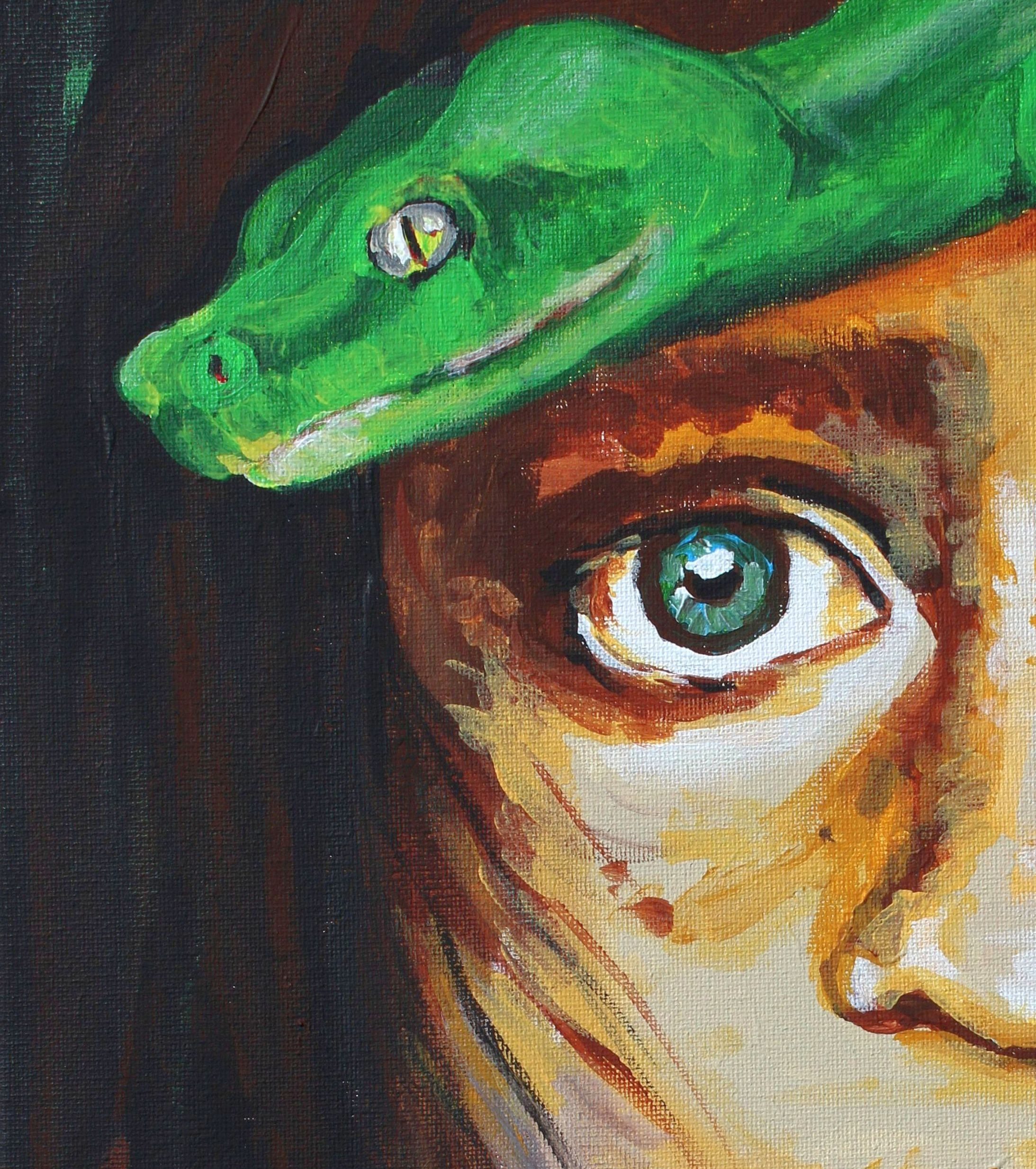
Image: A Girl with Flowers on the Grass (1878) by Jacob Maris. Public domain.
 Heart of Flesh Literary Journal
Engaging story, scary, too!
LikeLike