FICTION
The Weight of Small Stones
Every evening, Elias carried a stone home.

He never chose them deliberately. They appeared in his pockets the way regret appears — quietly, without announcement. A smooth grey pebble after he lied to a customer. A jagged one after he ignored the old woman asking for help with her groceries. Once, after turning away his brother at the door, he found both pockets heavy with something that bruised his thighs when he walked.

At first, he laughed it off.

“Stones are nothing,” he said aloud, tossing them into a wooden box beneath his bed.

But the box began to fill.

And the stones did not remain ordinary.

Some pulsed faintly in the dark. Some whispered — not words exactly, but impressions. A tightening in the chest. A memory replayed with sharper edges. A voice he did not want to recognize as his own.

Weeks passed. Then months.

Elias noticed he had begun to walk differently, as if bracing for weight even when his pockets were empty. He avoided mirrors. They seemed to hold him a second too long, as though waiting for him to admit something.

One night, unable to sleep, he opened the box.

The stones had arranged themselves.

Not randomly — but in a careful, terrible order. A path, perhaps. Or a record. The smallest ones clustered near the edges. The largest at the center, where a dark, almost black stone sat like a heart.

He reached for it.

The moment his fingers brushed its surface, the room shifted.

He was no longer in his house.

He stood instead in a vast, dim place — something like a valley, though no sky could be seen. The ground beneath him was covered in stones, countless, stretching farther than sight allowed.

“They are yours.”

The voice came from behind him.

Elias turned.

An old man stood there — not frail, but worn in a way that suggested endurance rather than weakness. His eyes held both sorrow and a strange, unwavering kindness.

“I didn’t mean —” Elias began.

“No one does,” the man replied gently.

Elias looked down at the endless field. “What am I supposed to do with them?”

The man did not answer immediately. Instead, he stepped forward and picked up one of the stones. It was small — barely noticeable.

“Carry it,” he said.

“I already have.”

“No,” the man said, placing it back into Elias’s hand. “Not like that. Carry it where it can be seen.”

Elias hesitated. “Why?”

“Because hidden weight grows heavier. Seen weight can be lifted.”

Elias swallowed. “By who?”

The man’s gaze softened, and for a moment, it seemed as though light — faint but undeniable — pressed in from somewhere unseen.

“Not by you.”

Something in Elias broke then — not loudly, not dramatically, but like a thread finally giving way after being pulled too tight for too long.

“I can’t carry all of this,” he said.

“I know.”

The words were not condemnation. They were relief.

The man reached out — not to take the stones, but to steady Elias as his knees gave way.

“Then let them go.”

Elias closed his eyes.

For the first time, he did not try to hide the weight, or justify it, or rearrange it into something smaller than it was. He simply let it be what it was — and admitted he could not bear it.

When he opened his eyes again, he was back in his room.

The box beneath his bed was empty.

His pockets were empty.

Morning light slipped through the window — not harsh, not blinding, but steady. Certain.

Elias stood there for a long time, unsure of what had changed, only that something had.

Then, quietly, he stepped outside — lighter than he remembered being — and walked toward the day as if it might finally be possible to begin again.
Atif Nawaz is a Pakistan-based writer with a degree in English Literature. His work explores themes of identity, morality, and the unseen dimensions of human experience, often blending realism with subtle philosophical and symbolic elements. He is particularly interested in stories that examine loss, redemption, and the quiet resilience of the human spirit.
Next (Jacob W. Surface) >
< Previous (Leah Johnston)
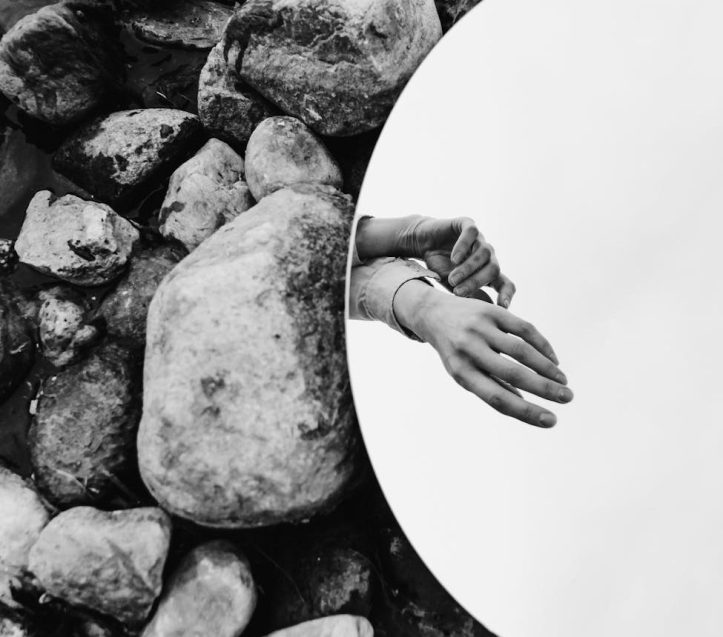
Photo by Vitalina Voroshkevich on Pexels.com.

