FICTION
Body
It worked. I followed the forty-day program exactly, and it worked, just as they said. I could barely sleep last night for the anticipation of it. And sure enough — morning forty-one — I got up and my body stayed in bed.
Look at it now, lying there. If you’ve ever had an out-of-body experience, this is not the same. Even out-of-body, you are fundamentally still in your body. It’s all a head thing. This is different — the real deal.
I think I expected to feel something about it. Elation, maybe. Triumph, joy. Relief. I was even prepared to experience grief. But I feel nothing; I’m not even numb. Just, absence.
My — its — eyes are still closed.
They don’t tell you what to do once the program’s worked. I don’t know anyone else who’s been successful. I know a bunch of girls who keep trying and giving up after day seven. Then this other girl who tried and got so sick that she was hospitalized. Now she’s out and is more body than ever.
In the absence of any other instruction, I get ready for work like I normally would: feed the cat, make coffee, take a shower. The water doesn’t warm me. As I grab my keys to leave, I look back at my body. It feels wrong somehow to leave it there in bed. I hesitate for a moment, then go back and fold it up — arms in, then in half, then in half again. It’s conveniently rearrangeable in ways it never was before. I slip it into my backpack and lock the door behind me.
I expect to feel lightheaded on the walk to the bus stop — shaky or clammy or anything at all. But I don’t. There were so many side effects throughout the program. There were days that my head felt like it was splitting in two or my heart felt like it would shiver right out of my chest, blind and frantic as a moth. Near the end, anything that touched me left a bruise. I had bruises on my hips from my mattress. I didn’t check if they were still there before I folded up my body and put it in my bag. I half want to swing my bag around and check right now, but there are other people at the bus stop, and I don’t want them to see that, after all this work and dedication, I went and brought my body with me.
I compromise by circling my wrist with my forefinger and thumb. There is nothing there. This, at least, is satisfying.
When I get to the office, I’m half-disappointed half-relieved that I don’t run into anyone on the way to my cubicle. I set my bag by my feet and turn on the computer. Its robot insides whir to life.
At lunch, as usual, I venture to the coffeemaker in the kitchenette. A few of my coworkers have congregated there, microwaving last night’s lasagna, waiting for the kettle to boil, leaning on the counter and eating instant noodles from a cup. As I approach, they fall silent. I fill my mug, coffee splashing out onto the counter. I sense their eyes on me as I reach for the paper towel.
“You look different,” says the guy from accounting. “Did you cut your hair?”
“Oh. No,” I laugh nervously. My gaze flicks to the woman eating noodles, HR rep, but she quickly looks away.
Then HR says, “What’s that sound?”
Accounting: “It sounds like … crying? Could it be?”
And sure enough, a muffled sob is coming from somewhere in the office. This tingly feeling runs through me, like hair standing on end, but all the hairs are on the inside.
The receptionist, overhearing as she comes around the corner, quips: “Probably just a classic case of corporate malaise.”
They hmm and mhm in understanding. I have the sudden and urgent need to not be among them, so I slip unsteadily away.
I all but fall into my chair, splashing coffee onto myself. It doesn’t burn. It’s then that I notice the sound has become louder. In fact — please, no —
I unzip my bag just a little bit, and sure enough, the cry is coming from my own body.
I rezip the bag so quickly that a bit of my hair gets caught, brown threads sticking out from the plastic teeth.
I throw my jacket over the bag to muffle the sound. Marginally better.
I try to think for a moment, casting around in my swivelling desk chair for some inspiration or solution, but all it does is give my panic time to grow, and finally I grab my bag with my body in it and take the stairs two-by-two out into the courtyard.
A handful of people are eating their lunches at the picnic tables, enjoying the spring sunshine. My flurry of movement draws their attention, and their voices turn to whispers. My body, folded up and zipped away, has begun to weep. I break into a run.
Once I reach the sidewalk, I continue east, weaving in and around people with little regard for manners. I’m not sure where I’m headed until I step off the concrete onto the boardwalk and the ocean spreads out in front of me, an expanse of churlish water. Seagulls shriek and dive through the mist thrown up and scattered by the waves. It’s so immense that, for a moment, I forget myself entirely.
But the weeping.
I take my body around to the side of the public bathroom and crouch between the shadow of the building and the dumpster. Here, hidden, I can unzip. I have to really work at it over the place where my hair is stuck, but finally my bag opens. I pull my body out partway until I can see the face. It’s sticky with tears and snot, and splotchy red. Hideous and baby-like. I wipe the cheeks and nose, try to shush it. It doesn’t let up, so I stuff the sleeve of my sweater into the mouth and grab my phone.
I have the agency’s number saved in my contacts. After one ring, an automated voice answers. I click through a series of menu options, hoping I’m heading down the right rabbit hole. Eventually, they put me on hold, then a woman picks up.
“Hello, you’ve reached Aftercare, how can I help you?”
“Hi, I finished the program yesterday and it worked, I think, but my body is weeping.”
“Ah. Yes. This happens sometimes when the program is not followed perfectly.”
“But I followed it perfectly!” My voice sounds desperate, childish.
“Mhm.” I can tell she doesn’t believe me. “Sometimes there are complications. The program doesn’t work the same for every body. There is no guarantee that it’ll take — you signed the waiver before you started. Do you have any allergies you didn’t list?”
“No!”
“Hmm.”
“When will it stop weeping?”
“In similar cases, there has been no cure for the weeping. The weeping is just a side effect that indicates the bodily evacuation was inchoate.”
I am silent, but for the weeping, which is not me, but my body.
“Is there anything else we can do for you?”
“I guess not,” I squeak, and before I can muster the energy or wherewithal to ask about warranty, she hangs up.
I scream in frustration, but the sound of it comes from my body’s mouth. In horror, I take the bag, still unzipped, by body half spilling out, and tear across the vacant boardwalk to the edge of the pier where I heave my body over the wooden railing and into the ocean.
The water seethes and shudders —
I am tossed under and upwards, whipped by the undertow, the ocean entering my body by every avenue — nose, eyes, mouth, there is ringing in my ears, my lungs aflame — the frigid Atlantic has solidified my muscles, seeped into my bones — before my vision, blurred, a hand —
I am wrenched from the water and carried to shore, where I am stretched out on the sand and shaking with my head on a lap. I am held as I gag and turn to the side to throw up all the contents of my stomach — salt water, digestive fluid, black coffee.
A cup is held to my lips; I don’t have the wherewithal to refuse, even out of habit. A thick liquid runs into my mouth, over my teeth and tongue, and I swallow.
The being who took my body from the ocean kisses my cheek and a sharp pain stabs my forehead above my eye. A sticky trickle runs towards my eyebrow and down to my temple. I reach up to touch it and my fingers come away red. I turn towards my assailant and savior, but I am alone.
I lay back upon the sand and close my eyes.
They don’t keep me in the hospital overnight. As soon as I can prove to them that I can walk on my own, they let me go. I take the bus home, grateful for the presence of strangers — the anonymity of a crowd, of bodies familiar in their unfamiliarity pressed together, everyone with the private security of somewhere to leave and somewhere to go. When I reach home, I shower and let the water warm me through to the bone. The floor of my tub is covered in sand. I avert my eyes from the bedroom mirror as I pull on my pyjamas, tightening the drawstring around my bruised hips. The cat’s warm body curls into the hollow of me and we fall asleep.
When I wake the next morning, every part of me aches. The face in my mirror looks the same as it always had — like some benign stranger, someone I should recognize. The only difference is the small red scab above my eye. I scratch at it but it won’t come away.
On the dresser, I notice a stick no longer than a thumbnail — a thorn. The base where it has been broken from its vine is still damp and green.
I hold it up to the light. The tip is dark with blood.
Mirjana Villeneuve is a teacher and writer from Ontario, Canada. Her work can be found most recently in Restoration, The Clayjar Review, Traces, and on her Substack, The Littlest Pilgrim.
Next (Paul Michael Garrison) >
< Previous (Jo Taylor)
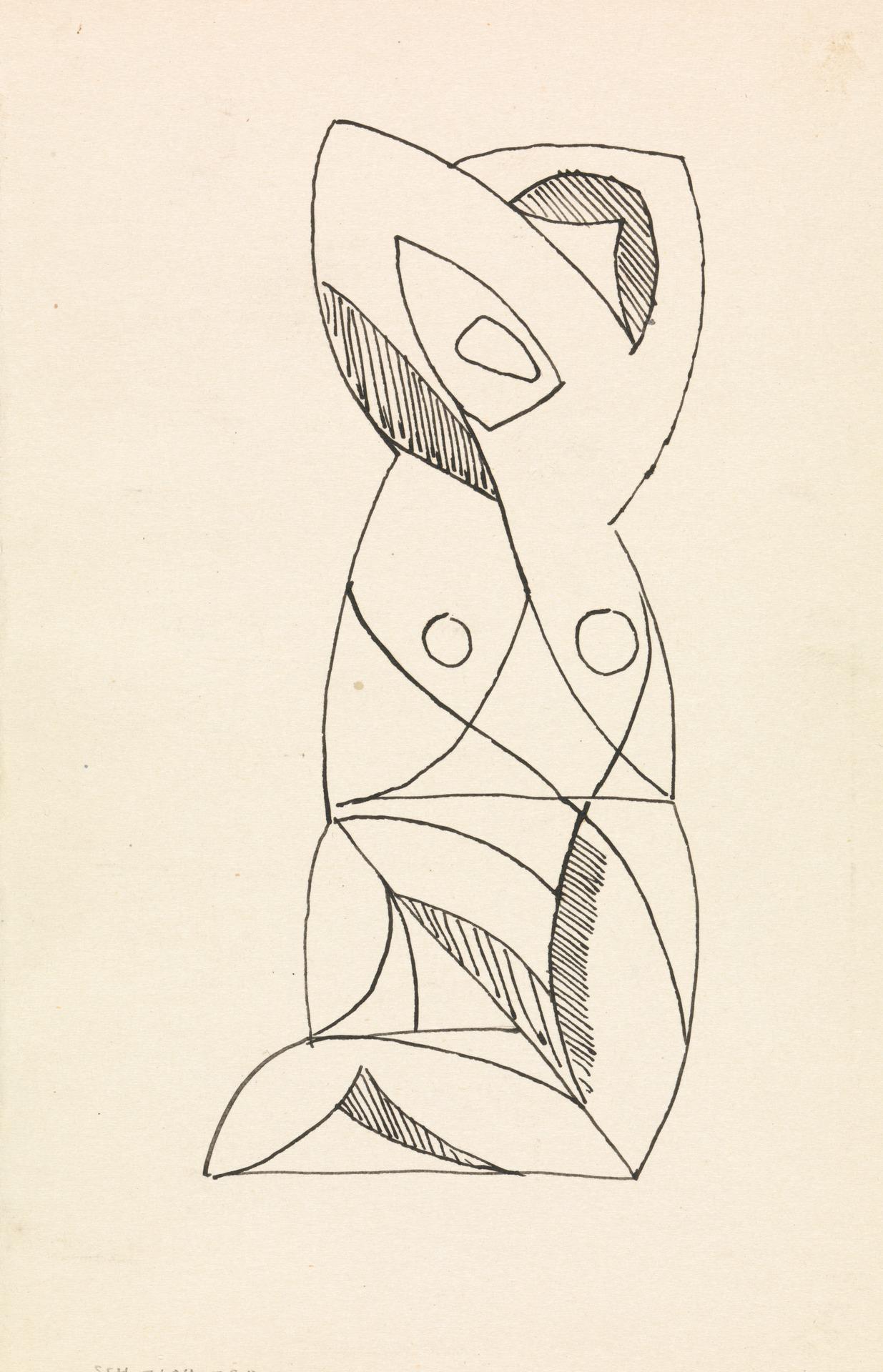
Image: “Kneeling Female Figure” by Henri Gaudier-Brzeska, Public domain.


A fresh, creative, engaging story. I loved it!
LikeLike
sad but true
LikeLike