POETRY
Worms
The children swing upon their playset,
back and forth.
They giggle and talk
in their own little ways.
They race toward the slide:
down they go.
They debate who was fastest
in their own little ways.
Beneath it all, do they know?
There’s worms in that dirt.
Their bare feet padding atop soft clover,
but worms are burrowing ever deeper.
There’s so many worms in that dirt.
They wriggle and chew their paths
through thick clots of age-old soil.
The children laugh. The worms dig.
They live unseen until a storm.
As rain floods the weedy grass,
the worms erupt from below,
revealing themselves in writhing strands.
God, how could there be so many?
I knew they were there,
but I left them alone.
I let them multiply in the dirt.
How awful those worms are.
Pink, wet strings squirming in filth.
Why did I let them thrive?
I fed them while the children slept.
My yard’s infested with these vile things,
but my shovel’s clean in the garage.
I hear their constant gnawing.
There’s worms in that dirt.
My children laugh and call my name:
around they chase.
They run and jump and laugh,
and I smile and cheer them on.
In the Still Silence
In the still silence, I sit with my thoughts. My office is dark. The magnolia scratches the siding. Children sleep. A distant TV still plays their show; it’s unaware the audience has gone home.
In the still silence, I sigh deeply, staring at my journal pages. If only my wife knew the garden I keep. The roots tangle and weeds strangle. All my labors produce more knots, and I stomp on fresh buds. The Gardener steadies my feet, leans down, and plucks carefully. The knots are untied, life regained.
In the still silence, my prayers sprout, grow, and multiply until the rains slow and the well dries. I weep in dust. The Gardener hears. He sees the hot sweat rolling across my brow. He shares His water and carries me toward shade. He calls the wind and I find relief.
In the still silence, I watch leaves wither and hills transform. I open the window, smelling sharp wood smoke. My harvest was meager. I want to put down the rake and barrow. I sit beneath barren trees and ask the Gardener why. He takes my hands and places them on the barrow. I cannot abandon the field.
In the still silence, snow falls quietly. The sun hides away. The deep grey reminds me of my own bones. The garden is bare, lifeless, and I have nothing to show. I sip my coffee, blanket across my lap, and I wonder where the Gardener goes when fields are dead and time slows. He enters and sits down next to me. His warmth is pleasant compared to the cool, thin walls and cold-paned window. I have no words for Him, but He nods and settles in.
The Lone Wolf
The forest is quiet. The slight breeze bears no scent; it’s stale. Leaves fall, puddling on the dirt floor. They’re teased, tossed, and scattered further. Creaking trees mumble in the valley. The mountain walls hold back the encroaching darkness. The sparrows have departed and no deer remain to pant for still waters. There are no clouds: just a dimming sun that dangles at dusk. Day will not leave. Night refuses to arrive.
The lone wolf limps about. It paws at dust. No hunt to be had: it’s all dust and leaves. Dry twigs will be its only solace today.
Tree branch ribs ripple beneath the thin fur. The lone wolf spits a sharp tooth into an abandoned hole. It surveys the four corners and nothing has gathered. It whimpers. If it could climb higher, it would. If it could cast bone lots on shoreline shale, perhaps the mystery of current suffering would be unveiled. All is silent. The curtain remains steadfast; it’s not been torn.
A hawk flies overhead but does not slow.
Crunching bird bone scraps in this wilderness would be a king’s feast. The lone wolf hacks and vomits thick blood clots onto a withered thornbush. There’s damage somewhere; it’s more than this lone wolf can understand. It desperately scratches at the lukewarm dirt. No scent. No life. No night. No dreams. No relief. It debates returning to the carrion of yesterdays. How many times can it lick the bones for food?
The lone wolf raises its head toward heaven and howls. It suddenly gags and heaves: its cry is rejected. If tears could form, they’d be a river. Maybe fish would swim once more, the deer drink freely, and the bear wildly splash. The tears have been removed too soon. Stones are now the river’s fish. The fields are barren. The caves are abandoned. The wolf’s den is filled with familiar bones it cannot leave. Even the comforting scent they once carried has fled.
The lone wolf longs for something it cannot comprehend. Another racking coughing fit pummels its chest. The blood dribbles from parched lips, and the lone wolf resumes its hopeless pawing at the dust of creation.
Lance Hutson is a husband, father, and CPA from West Virginia. His work centers on fatherhood, faith, struggle, and home.
Next (S.C. Sams) >
< Previous (Cody Adams)
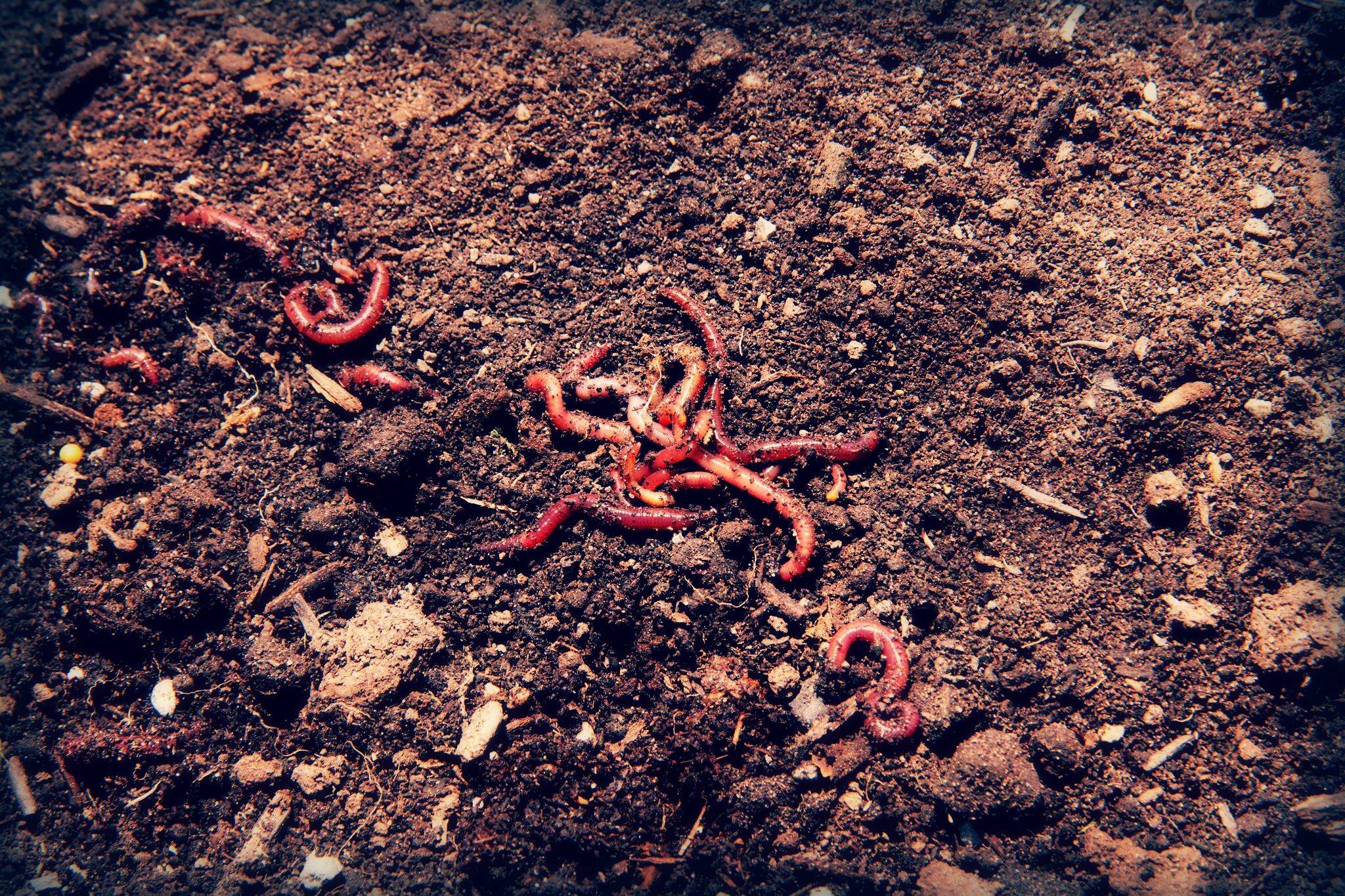
Image: Earthworms, healthy soil, U.S. Gov Works, Public Domain, via rawpixel. Modified by Veronica McDonald.

