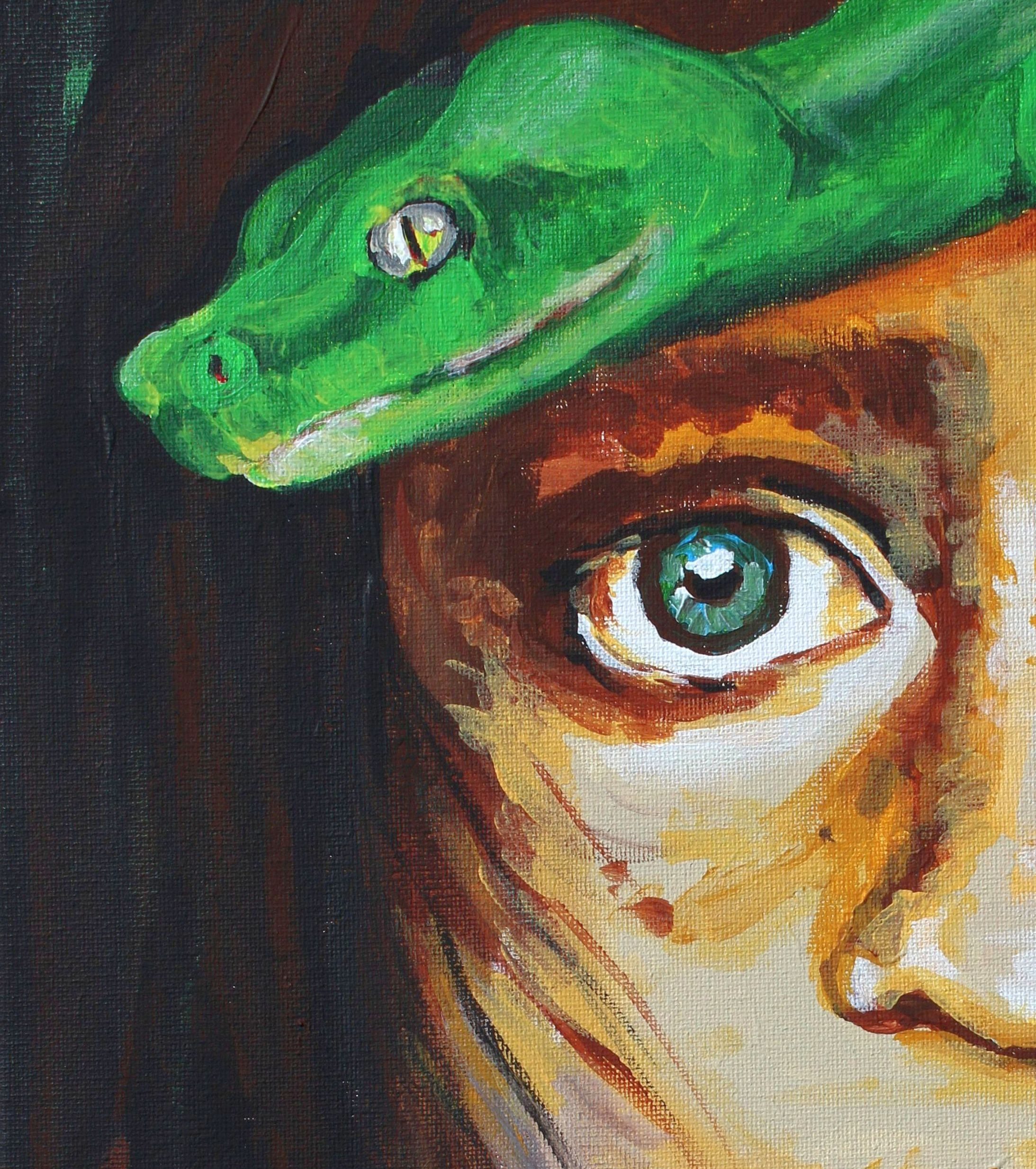
NONFICTION
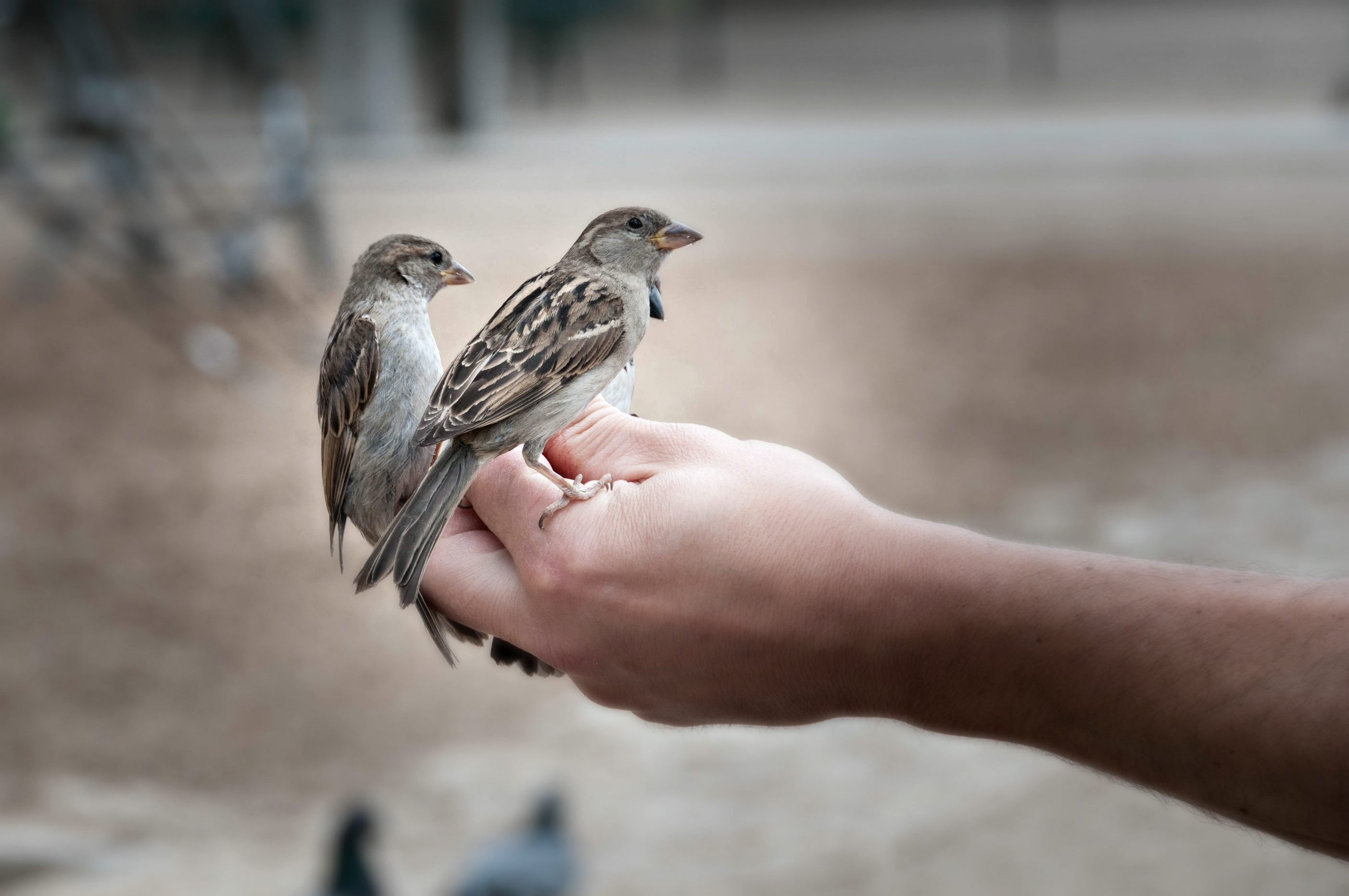
Are not two sparrows sold for a penny?
Portland in February. Supposedly it is a good time of year to visit Oregon, but I might call it bipolar. The weather had that kind of temperament. Indecisive, mercurial. Deceptively sunny, then would hit me sideways with gray rain. On a rainy Thursday, we drove to see the falls near Bridal Veil. The town (it is a town) rests along the south side of the Columbia River, and has nothing but waterfall trails and a post office. The rain there had a fresh mossy scent that provided great relief from the sour rust smell of the wet city. I cupped it in my lungs. It was sharp.
From the parking lot, we could already see Multnomah Falls. The blurry white ribbon unspooled from an abrupt cliff. So many trees, dark and green, crowded the slopes. I said our breath in the cold made us look like dragons. He said it was like we were smoking hookah.
We walked through a tunnel that slipped under the highway and past the visitor’s center to stand at the spitting foot of the waterfall. Icy droplets freckled my pink face. I said that it was cold. I said it was cold louder, because he did not hear me over the shushing of the rushing water. I tucked my nose and chin under the collar of my sweatshirt and blew warm air onto my chest. He took my hands between his, rubbing feeling back into my stiffening fingers. My head tilted to the side. I smiled at him. It was nice when he did things like that.
We followed slick stone steps up to a bridge. From there, the falls were nearly indistinguishable from the rain; white water disappeared into white air. I thought it was funny that we came all that way in all that water to see more water. I laughed and told him this. He did not seem to think it was as funny as I did. The rain fell heavier, and we left soon after that.
On our way back to his house, we stopped in Gresham. There was a coffeehouse there at the corner of NE 3rd Street and N Main Avenue called Café Delirium, which is now permanently closed. Inside was a yellow and blue tartan couch, several distinguished armchairs, bar seating facing the street, a painting of Shakespeare, and a 1970’s television set repurposed as an end table. We ordered at the wooden counter. He paid and flashed a smile at the pretty barista. I wished I could have crawled out of my own green skin and into hers. He dropped his change in a paper cup with “tips” sharpied on. The coins clinked lightly against each other. We found seats near the door, and he propped his feet up on an orange ottoman that looked to me exactly like a giant wheel of cheese. I stifled a laugh and he asked why, so I told him. He seemed to think this was funny, and I could smile a little easier. When I turned to the window, it looked like the sky was clearing up. Our drinks were ready at the counter. As we left, the door’s little bell chimed, starlike.
The sidewalks on North Main were laid with square cement tiles. They broke and slanted over sprawling tree roots and under years of heavy foot traffic. Rain filled these uneven spaces with its cold and lifeless puddles. Closer, I could see my reflection in them. The thin sprinkle disturbing the surface made me look faceless. In physics, it is the law of reflection applied to dimpled water that scattered my face like that. These ripples caught my image and returned them at wrong angles. As streetlights fall into astigmatic puddles, something fractured still strains upwards. It is like the fall of a wounded bird. From the ground, her crooked wing bends at an angle, directed towards the cold Oregon sky. Reaching.
At dinner that night, his mother told me he once tended to a bird like this. She said he found the poor thing lying on her back on the glistening sidewalk. Her feathers were crumpled. She must have fallen from a tall tree, because her beak was chipped on the left side. Or maybe she hit something on the way down. Cradling her with sorry hands, he tucked her into his chest. He carried her home like that, shielding her from the rain. It flicked against his raincoat in small plasticky pitters. He was only a little boy, his mother said. I nodded and smiled, but kept my eyes on my plate.
It occurred to me. The thought was enough to make me forget the fork in my hand. It slipped and clattered against the ceramic plate. He must have had little boy hands then. Those careful hands would have pet her dry with a hand towel. Small and gentle fingers would have stroked her downy breast. They would have scraped through mud and dirt after lacquered beetles to feed her. I think his mother told me this to reassure me or perhaps to preserve him. Today, I cannot help feeling some kind of soft grieving rage against her. But she could not have known. I have to remind myself that she could not have known.
She described those innocent hands, and I tried to picture them. I wanted to give them credit, but there they were right in front of me, across the table, poking fork tines at the green beans and rice grains on his plate. Turning his glass in slow whirlpools. Wadding his oily napkin into a familiar fist.
I wanted to forget those hands pressing hard against my chest. How I tumbled flightless from his bed. My front tooth chipped against his dresser. It tingled in my mouth for days, a small sharp edge I worried with my tongue. I didn’t want anyone to notice. A week later, I perched on my bathroom counter, scraping it even with a nail file. Another night, I tried whispering into his ear. Words so small they crawled like beetles out of my throat.
I said that I was scared.
I said that I was — those hands closed over my mouth, shushed me.
“Can you just ___ it one more time.”
He did not wait for an answer. It would not have made sense to. It was not a question.
Afterwards, I rehearsed small excuses like prayers.
It was an accident. He did not hear me.
I used to ask God this question like a quiet ache: why not me? That tenderness had been spent on a bird. A bird.
One night I told God to fuck off and waited for the cold tile against my back to split open and swallow me. It didn’t.
It has been a few years now. Sometimes I wonder if the residue of that ache will ever wash away. Sometimes I think that if it had never happened, I would be able to sprout feathers and fly. But sometimes, a strange clarity strikes me. A small insistence. The faintest pressure on my chest that I might be worth something. When that happens, I want to wander back to that avenue. Listen to the sweet trilling of birds in the trees. Look at my reflection on the ground. I imagine there waits a steady puddle that gives me back to myself. Harder to see in the rain. But when the sun comes out, the surface stills, and I am a clearer image. The world smells the way it smells after rain, like the whole of it is made of pure copper. Rich. Heavy. I pause and fill my lungs with it, all the way to the brim, and keep walking away from a corner coffeehouse in Oregon, which closed.
Lucy Swan is a teacher based in Southern California. Lucy has a heart for poetry and history. She believes that poetry and history in cooperation offer a fuller understanding of our particularly personal and universally immanent God. Her writing aims to reflect this synthesis. Her work appears in The Clayjar Review and Concordia’s The Aerie, where she also served as an editor.
Next (Jessica Lynne Henkle) >
< Previous (Wendy Westley)
Image is in the Public domain. Modified by Veronica McDonald.

